
3 Smart Moves Every Student Should Make Before Their Final Year

For many students, the final year of the university feels overwhelming. Exams pile up, expectations rise, and suddenly the question: What’s next? arises. What often gets overlooked is that the most important decisions aren’t made in the final year itself, but in the time leading up to it.

Students who plan early don’t just reduce stress; they create options. These three smart moves can help you step into your final year feeling prepared, confident, and ahead of the curve.

The first move is learning to track opportunities early, rather than waiting until things feel urgent. Scholarships, internships, exchange programs, and grants usually open months in advance, and many students miss them simply because they start looking too late. By the time deadlines arrive, it’s already too late to gather documents, improve qualifications, or meet eligibility requirements.

When you begin paying attention early, you give yourself time. Time to prepare applications properly, time to improve your profile, and time to make informed decisions instead of rushed ones. This is why following reliable education platforms and staying aware of what’s available can quietly shape your future. Opportunity doesn’t always come loudly, sometimes it passes by unless you’re paying attention.

The second move is building a future-ready CV before you think you need one. Many students believe a CV is something you prepare only after graduation, once you have achievements worth showing. In reality, your CV grows alongside you. It reflects your effort, curiosity, and willingness to learn, not just your final results.

Even before your final year, your experiences already matter. Academic projects, volunteering, online learning, student initiatives, writing, research, or even managing a small personal project all show initiative. A future-ready CV tells decision-makers that you didn’t wait passively for success, you worked toward it. This mindset matters just as much as grades.

The third move is learning at least one practical skill that your classroom may not teach you. While formal education focuses heavily on exams and syllabi, real-world opportunities often depend on skills learned outside traditional lessons. Writing clearly, communicating confidently, using digital tools effectively or understanding how to research and think critically can give you a serious edge.

You don’t need to master everything. Choosing one skill and improving it steadily before your final year can make a noticeable difference in applications, interviews, and academic work. These skills don’t just help you after graduation; they support you throughout your studies.

Your final year should not be about scrambling to catch up. It should be a transition into the next phase of your life with clarity and confidence. Students who succeed aren’t always the ones with perfect results; they’re the ones who planned earlier and made thoughtful choices along the way.

Related Reads:

Discover Scholarships You Didn’t Know Existed!

1. Australia Awards Scholarships (Fully Funded)

Australia Awards Scholarships are prestigious fully funded scholarships offered by the Australian Government (Department of Foreign Affairs and Trade) to students from eligible developing countries. These awards are designed to support long‑term study (undergraduate or postgraduate) in Australia and build skills to contribute to development in the recipients’ home countries.

What’s included:

  • Full tuition fees paid
  • Return economy‑class airfare
  • Living allowance (fortnightly stipend)
  • Establishment payment for accommodation/study materials
  • Health insurance (Overseas Student Health Cover)
  • Pre‑course English training (if needed)
  • Academic support & fieldwork assistance (for research students)

Application timeline:

2027 intake applications opened 1 Feb 2026 and close 30 April 2026 (check exact times for your country). Applicants must submit through the official Australia Awards portal (OASIS).

Who can apply:

Citizens of participating developing countries in the Indo‑Pacific region who want to pursue full‑time study in Australia in fields that support their country’s development goals.

Specific eligibility and deadlines vary by country.

Important: Visit the official page for the scholarship: Australia Awards Scholarships

2. Master Mind Scholarships (Flanders & Brussels, Belgium)

The Master Mind Scholarship is awarded by the Flemish Ministry of Education and Training to outstanding international students who want to pursue a master’s degree at a university or higher education institution in Flanders or Brussels (Belgium, part of Europe).

Scholarship Benefits

  • Grant of about €10,225 per academic year
  • Full tuition fee waiver at participating institutions
  • Scholarship supports one or two academic years depending on your master’s programme length (60 ECTS = 1 year; 120 ECTS = 2 years).

Who Can Apply (Eligibility)

  • You must be applying for a master’s programme at a Flemish higher education institution.
  • High academic performance, usually a GPA of around 3.5/4.0 or equivalent.
  • Proof of English proficiency (like IELTS or TOEFL) is required.
  • You must be accepted by the host university first to be considered for the scholarship.
  • All nationalities are eligible, including Sri Lankan students, but Russian citizens are excluded this year.
  • You cannot already be enrolled in a Flemish university (unless in a preparatory course).

Timeline & Process

  • The call for academic year 2026–2027 is now open.
  • You generally apply to your chosen university first before the institution nominates you for the scholarship.
  • Deadlines vary by university, often between Feb–Apr each year.

Important: Visit the official page for the scholarship: Master Mind Scholarship

3. Science@Leuven Scholarship (KU Leuven, Belgium)

The Science@Leuven Scholarship is a prestigious academic award offered by the Faculty of Science at KU Leuven to support outstanding international students who want to pursue a Master’s degree in selected science programmes at KU Leuven. It’s designed to attract top talent from around the world.

Who can apply:

International students of any nationality (including Sri Lankan students), you just need to meet the eligibility requirements and be applying for a qualifying Master’s programme at KU Leuven.

Eligible Master’s fields include:

  • Astronomy & Astrophysics
  • Biology
  • Biophysics, Biochemistry & Biotechnology
  • Chemistry
  • Mathematics
  • Physics
  • Statistics & Data Science
  • Sustainable Development
  • (Some fields may have specific conditions.)

Scholarship benefits:

  • €12,000 allowance per academic year (up to two years) to help with living costs.
  • Partial tuition fee reduction – for non‑EEA students, the remaining tuition fee can be significantly reduced (e.g., around €3,252.72 in 2026–27).

Application timeline:

  • Applications open: typically 1 October 2025
  • Deadline: 15 February 2026
  • To apply for the scholarship, you first apply for the Master’s programme, then include your admissions confirmation when submitting the scholarship application.

Basic eligibility requirements:

  • A Bachelor’s degree from a non‑Belgian institution
  • High academic performance comparable to Distinction
  • Strong English proficiency (e.g., IELTS 7.0 / TOEFL iBT 94+)
  • Motivation and letters of recommendation from professors
  • No previous Master’s or study/work experience at KU Leuven

Important: Visit the official page for the scholarship: Science@Leuven Scholarships

4. International Master’s Scholarships – Université Paris‑Saclay (France)

The International Master’s Scholarships programme at Université Paris‑Saclay in France supports outstanding international students (including Sri Lankan citizens) who want to pursue a Master’s degree at one of the university’s member institutions. All academic fields are eligible, and the scholarship encourages highly‑qualified students to join research‑oriented or regular Master’s programmes.

Eligibility

  • You must be a foreign national (non‑French) admitted to a Master’s programme at Université Paris‑Saclay before the scholarship deadline.
  • You must be under 30 years old in the year of application.
  • You should be enrolling in France for the first time in higher education (exceptions exist for certain short stays, language courses, or mobility exchanges).
  • You must not receive other funding exceeding €600/month (including other scholarships like Erasmus Mundus or France Excellence).

Sri Lankan students qualify as international applicants as long as they meet the criteria above and are admitted to a Master’s programme.

Scholarship Benefits

  • €10,000 per year (paid monthly for ~10 months of the academic year) to support living costs.
  • Up to €900 travel and visa support depending on your country of origin.
  • Scholarships are awarded for 1 year (M2) or 2 years (M1 + M2 with continuation).

Application Timing (Academic Year 2026–2027)

  • The deadline to be selected by your Master’s programme coordinator is 25 March 2026.
  • After being selected by the programme, the deadline to submit the scholarship application is 31 March 2026.
  • Results are expected mid‑May 2026.

Important: Visit the official page for the scholarship: International Master’s Scholarships Program

5. World Bank – JJ/WBGSP Scholarship (Joint Japan/World Bank Graduate Scholarship Program)

The JJ/WBGSP is a fully funded international scholarship for mid‑career professionals from developing countries who want to pursue a Master’s degree in development‑related fields at selected universities around the world.

Sri Lankan Eligibility

  • Sri Lanka is included on the list of eligible developing country nationals who can apply.
  • Applicants must not hold dual citizenship of any developed country.
  • You must be admitted unconditionally (except for funding) to one of the 44 participating master’s programmes before applying.
  • You must have at least 3 years of paid, development‑related work experience after your Bachelor’s degree, acquired within the past six years, and be currently employed full‑time in development‑related work.

This means recent graduates cannot apply immediately unless they have three years of relevant full‑time work experience.

Scholarship Benefits

JJ/WBGSP provides a strong financial package covering:

  • Full tuition fees for your master’s programme
  • Monthly living stipend to cover accommodation and daily costs
  • Round‑trip economy airfare between Sri Lanka and the host country
  • Health insurance through the university
  • Travel allowance (e.g., US $600 for departure and return)

These benefits typically cover up to 2 years of study or the duration of the programme, whichever is shorter.

Application Timelines (2026 Cycle)

There are two application windows for the 2026 cycle:

  • Window 1: January 15 – February 27, 2026
  • Window 2: March 30 – May 29, 2026

To apply, you must receive an unconditional admission offer to a participating master’s programme before submitting the scholarship application.

Post‑Study Commitment

If selected, scholars are expected to return to their home country after studies to use their skills toward national development.

Important: Visit the official page for the scholarship: World Bank Scholarships Program

Disclaimer / Note for Readers:

All scholarship details shared here are for informational purposes. Before applying, please visit the official scholarship websites to confirm eligibility, deadlines, and requirements. Links to official sources are included in each post. This ensures you have the most accurate and up-to-date information.

Five Costly Mistakes Students Make When Applying to Universities Abroad and How to Avoid Them

Studying abroad is a dream for millions of students. It all sounds exciting with new countries, world-class universities, better career prospects. But behind every successful overseas student story, there are dozens of failed or delayed applications caused by simple, avoidable mistakes.

We break down the five most common errors students make when applying to universities abroad, mistakes that quietly ruin chances, drain savings, and add unnecessary stress.

Starting too late

Many students underestimate how long applications really take, from preparing for language tests to gathering documents and writing personal statements. Rushing through the process often leads to weak applications that don’t reflect a student’s true potential. To avoid this, create a timeline that includes test dates, document preparation, recommendation letters, and visa planning; not just application submission.

Poor research

Choosing universities based only on rankings or reputation can backfire. Course structure, teaching style, location, visa rules, and post-study opportunities matter far more than most applicants realize.

Students often misjudge standardized tests, assume scholarships are “not for them,” or submit generic personal statements that fail to stand out in a competitive global pool. If you’re planning to study abroad, first understand how to apply smarter, earlier, and with confidence.

Underestimating Language and Entry Exams

Language and aptitude tests aren’t box-ticking exercises. They are competitive filters. Many students aim for the minimum score, not realizing that higher scores can dramatically improve admission and scholarship chances. Some even delay test preparation until deadlines are dangerously close, leaving no room for improvement.

Take a diagnostic test early to understand where you stand. Build time for weak areas (writing and speaking are common problems), a possible retake and score reporting delays. Think of test scores as leverage, stronger scores give universities more reasons to say yes.

Writing a Generic Personal Statement

Admissions officers read thousands of personal statements. They can instantly recognize copied templates, vague ambitions, and statements that could belong to any student applying anywhere. A weak personal statement doesn’t show who you are, what you want, or why the university should invest in you.

A strong personal statement answers three questions clearly:

  1. Why this field of study?
  2. Why this university and this course?
  3. Where do you want this degree to take you?

Personalize your statement. Show reflection, clarity, and purpose, not just achievements.

Ignoring Scholarships and Financial Planning

Many students believe scholarships are only for “top geniuses” or assume they won’t qualify. As a result, they don’t apply and lose out on funding that could significantly reduce costs. Others receive offers but later struggle with living expenses because they didn’t plan realistically.

Treat scholarships as part of your application strategy, not an afterthought. Look for:

  • University-specific awards
  • Government and country-based funding
  • External foundations and organizations

Even partial scholarships can ease pressure and improve your study experience.

Studying abroad is not just about intelligence or ambition. It’s about preparation, awareness, and smart decision-making. Every mistake listed here is common and every one of them is preventable.

Before submitting your applications, pause and ask yourself:
Am I applying carefully or just hoping for the best?

Sources: Times Higher Education – Five mistakes to avoid while applying to universities abroad

Explore our recent article:

Degrees for Sale: How Sri Lanka’s Degrees are Turning into Merchandise

For decades, a university degree in Sri Lanka symbolised discipline, sacrifice, and intellectual achievement. It was something earned through sleepless nights, relentless exams, and years of academic struggle. Today, that meaning is quietly eroding. Behind campus gates and official ceremonies, an uncomfortable reality is taking shape: degrees are increasingly treated as transactions, not achievements.

This is not about a few dishonest students cutting corners. It is about a system slowly bending under pressure, where academic integrity is compromised, standards are diluted, and credentials are sometimes obtained without genuine scholarship. When education becomes a shortcut rather than a process, the damage goes far beyond individual universities.

When qualifications matter more than knowledge

Sri Lanka’s education system has long been praised for producing capable professionals despite limited resources. Yet the growing obsession with titles, Dr., Prof., MBA, PhD, has created a culture where the label matters more than the learning behind it.

In some academic and professional circles, advancement depends less on research quality or teaching ability and more on possessing the “right” degree. This pressure fuels an underground economy of academic misconduct: outsourced theses, copied research, questionable foreign affiliations, and degrees obtained with minimal academic engagement. When credentials become currency, learning becomes optional.

The rise of academic shortcuts

What was once whispered is now openly discussed. Students speak of thesis-writing services operating in plain sight. Research is recycled, paraphrased, or purchased. Supervisory oversight is often weak, overstretched, or compromised. In extreme cases, allegations surface of degrees awarded through influence rather than evaluation.

This environment does not emerge by accident. It thrives when accountability is weak and enforcement is selective. Universities are pressured to produce graduates quickly. Lecturers are burdened with excessive workloads. Regulatory bodies move slowly or not at all. The result is a system where appearance replaces substance

The greatest victims are of this issue are not the dishonest few who exploit loopholes, but the honest many who still believe in merit. Students who genuinely work hard find their qualifications devalued. Employers grow skeptical, increasingly relying on foreign certifications or private assessments to judge competence.

More dangerously, society bears the long-term cost. When unqualified individuals occupy positions in education, healthcare, engineering, or governance, the consequences are real, poor decisions, weakened institutions, and declining public trust.

A degree without knowledge is not harmless. It is risky.

This is not an attack on higher education. It is a warning. Sri Lanka’s universities remain home to brilliant students and dedicated academics who uphold standards despite the odds. But their efforts are undermined when the system allows degrees to be bought, borrowed, or fast-tracked without merit.

If education loses its credibility, rebuilding it will take generations.

Related Reads:

Struggling at University? You’re Not Alone and No One Talks About This Enough

For many students in Sri Lanka, getting into university is supposed to be the dream. Years of exams, pressure, sacrifices, all leading to one moment of success. But once the excitement fades, reality hits hard.

Behind the lecture halls and graduation photos, thousands of university students are quietly struggling, academically, financially, mentally, and emotionally. And most of the time, they feel like they’re the only ones going through it. They’re not.

The Pressure Nobody Warned You About

University life isn’t just about lectures and exams. It’s about surviving a system that often feels unprepared for the students it serves. Overcrowded classrooms.
limited access to resources and outdated teaching methods. Many students want to learn but the environment makes it harder than it should be.

Financial Stress That Never Takes a Break

For students from low- and middle-income families, university life comes with constant worry. Rent. Transport. Food. Printing notes. Internet costs. Even state universities aren’t truly “free” anymore. Financial stress doesn’t just affect wallets, it affects concentration, confidence, and mental health.

“What Am I Even Doing This Degree For?”

One of the most common, yet rarely discussed struggles is uncertainty about the future. Many students enter degree programs without proper career guidance. Years later, they’re stuck asking:

  • Will this degree get me a job?
  • Am I wasting my time?
  • What skills do employers actually want?

The silence around these questions makes students feel lost and anxious.

Mental Health: The Quiet Crisis

Academic pressure, family expectations, social comparison, and financial struggles all pile up and with that comes: Anxiety. Burnout. Loneliness. Yet mental health support on campuses is often limited or students are too afraid to ask for help because “everyone else seems fine.”

Spoiler: they’re not.

The Truth No One Says Out Loud

Struggling at university doesn’t mean you’re weak. Feeling lost doesn’t mean you’re failing and being confused about your future doesn’t mean you’re behind. It means the system needs to do better and students need honest conversations, real guidance, and practical support.

Students deserve more than just degrees; they deserve clarity, confidence, and real-world readiness.

Related Reads:

Why Good Grades Don’t Mean You’re Ready for the Real World

For generations, students have been taught the same formula for success: get good grades → get into a good college → get a good job → be successful. But as more people enter the workforce and life beyond school, it’s becoming clear that this equation is oversimplified and in some cases, misleading.

Grades measure academic performance, not life skills. Good grades typically reflect how well a student memorises information, follows instructions, and performs on tests. They don’t measure the practical skills most adults use daily in the workplace and in life, such as communication, decision-making, adaptability, and teamwork. Employers frequently report a noticeable gap in these areas among new graduates, even those with high academic scores. Studies show that many graduates lack skills like decision-making and teamwork that employers value most.

Real-world success depends on more than test scores. Research suggests that qualities such as resilience, creativity, emotional intelligence, and problem-solving often matter more than academic achievement alone. Psychologists like Angela Duckworth, author of Grit, argue that persistence and effort play a central role in life success, beyond innate ability or grades.

Similarly, educational critics point out that grading systems tend to reward conformity and compliance rather than curiosity and innovation, traits that are essential in today’s rapidly changing world.

Grades don’t predict leadership or creativity. A key weakness of traditional grading is that it rewards doing what is expected, not pioneering what is possible. Research highlighted by analysts like Eric Barker shows that top academic performers often excel at structured tasks but are no more likely than others to become innovators or leaders who reshape industries or solve complex societal problems.

Life Skills Aren’t Taught in a Classroom – They Are Practised

Many real-world skills like stress management, conflict resolution, financial planning, self-management, the ability to adapt to uncertainty, simply aren’t part of standard school grading. An article exploring shortcomings in school preparation points out that independence and self-management are assumed, not taught in most education systems, leading to young adults who struggle when structure disappears.

Luck, environment and opportunity matter too. Beyond personal attributes, research also shows that randomness and opportunity play a significant role in life outcomes. Some of the most successful individuals were not top academic performers early in life, but caught the right breaks, developed niche skills, or adapted to opportunities in ways that school tests simply do not measure.

Grades can open doors but they don’t keep them open!

It’s worth noting that grades do matter in certain contexts. Strong academic performance can help students get into universities and professional schools, and it does signal dedication and discipline to some employers. For many people, good grades are still valuable as a starting point, or as a way to access opportunities. But they are not a guarantee of long-term success and they shouldn’t be mistaken for a complete preparation for life beyond school.

Good grades are a useful indicator of academic effort and knowledge but they don’t measure the soft skills, adaptability, creativity, and resilience that make someone ready for the real world. Grades can open doors, but real-world success depends on a broader set of qualities that schools and employers increasingly value.

“UNESCO and Huawei to Support Smart Classrooms in Sri Lanka”: PM – should This be The Real Priority?

Speaking during a discussion held recently at the Ministry of Education with representatives from Huawei Technologies and the UNESCO International Research and Training Centre for Rural Education (UNESCO-INRULED), the Prime Minister Dr. Harini Amarasuriya emphasized the need to use foreign educational assistance in the most effective manner for the wellbeing of students.

She stated that the Ministry of Education and the Digitalisation Task Force should jointly launch a coordinated programme to ensure that digital equipment, including interactive display panels required for smart classrooms, is distributed systematically and equitably among schools. Special attention, as she noted, must be given to rural areas to reduce educational disparities.

This evidently signals a clear intention to modernise classrooms, particularly in rural areas. Interactive screens, smart classroom tools, and teacher training programmes are being positioned as key solutions to bridge long-standing educational gaps. On paper, it sounds like progress. But an important question remains: are digital tools what Sri Lankan classrooms need most right now?

There is little doubt that technology can enhance learning when used thoughtfully. Interactive displays can make lessons more engaging, digital content can widen exposure, and trained teachers can use technology to explain complex concepts more effectively. For rural schools that have long been under-resourced, such initiatives also represent recognition and long-overdue attention.

Yet, the reality inside many classrooms tells a more complicated story.

Across the country, thousands of students still struggle with basic access to textbooks, libraries, and reading materials. In some schools, book shortages persist and reading corners are nonexistent. For younger students especially, foundational learning depends less on screens and more on books they can hold, reread, annotate, and truly engage with because literacy, comprehension, and critical thinking are still built page by page.

This raises a critical concern: does introducing advanced digital equipment risk addressing the future before securing the basics?

Digital tools are only as effective as the systems that support them. Maintenance, internet access, and trained teachers and technical staff are not evenly available across schools. Even with teacher training underway, the long-term sustainability of smart classrooms depends on continuous funding, technical support, and clear usage policies. The education system is still learning to manage these challenges.

The government’s emphasis on child safety frameworks and age-appropriate digital use is a welcome and necessary step. It acknowledges global concerns around screen time, distraction, and digital dependency. Still, regulation alone cannot replace the deep learning that comes from quiet reading, sustained attention, and access to quality printed material.

This does not mean Sri Lanka should turn away from digitalisation. Rather, it suggests the need for balance. Technology should complement education, not overshadow its foundations. A smart classroom without books risks becoming a visually impressive space that lacks depth. Conversely, a classroom rich in books but supported by selective, purposeful technology may offer students the best of both worlds.

As foreign-funded digital initiatives move forward, policymakers may need to ask a simpler, student-centred question:
Are we building classrooms that look modern or classrooms that help children learn better?

True educational progress may lie not in choosing between screens and books, but in ensuring that every child and teacher first has access to the essentials, before being introduced to the extras.

Top Misconceptions About Choosing a Master’s Degree

Choosing a master’s degree is a major step toward building your future but too many students make decisions based on myths instead of facts. These misconceptions can lead to picking the wrong programme, wasting time, or missing out on better opportunities. Check out these misunderstandings and find the truth behind them so you can make a smarter choice.

1. “Any Master’s Degree Will Guarantee a Better Job”

Almost everyone thinks that simply having a master’s degree means you’ll automatically get a better job but in reality, a postgraduate degree can improve your employment prospects but only if it’s relevant to your career goals and industry demands. Employers look at the skills you bring, not just the title of your degree. Choosing a course that matches your career path and equips you with practical skills is far more important than the degree itself.

2. “Prestigious Universities Are Always the Best Choice”

The misconception is that more prestigious names equal better programmes whereas in reality, reputation is important, but it isn’t everything. A top-ranked university may have limited options in your specific area of interest. In contrast, a lesser-known institution might offer excellent training, closer mentorship, or stronger industry connections in your field. What matters most is fit; not brand name.

3. “A Master’s Degree Is Only for Academics”

Misconception: Master’s degrees are only for people who want to become researchers or lecturers.

Reality: Postgraduate study benefits a wide range of professionals. Many master’s programmes focus on industry-ready skills, real-world projects, internships, and professional networking. Whether you want to become a specialist, move into management, or switch careers, the right master’s degree can help.

4. “You Must Know Your Career Path Before Applying”

If you’re not 100% sure about your career, you shouldn’t pursue a master’s. People might repeat this for a while but time will say, it’s good to have direction, but you don’t need a perfect roadmap.

Masters programmes often help you clarify your goals and explore new areas. What matters is picking a subject that genuinely interests you and builds useful skills. You can refine your exact career focus later.

5. “Online Degrees Are Less Valuable”

Misconception: Online or distance learning isn’t as respected as on-campus study.

Reality: Today, many online programmes are developed by top universities and accredited in the same way as campus degrees. What matters is accreditation, quality of curriculum, and learning outcomes, not delivery mode. Online degrees can be especially valuable if you need flexibility while working or managing other commitments.

6. “Higher Cost Means Higher Quality”

People have misunderstood that expensive tuition means a better degree but while quality programmes sometimes cost more, price alone doesn’t guarantee value. Scholarships, funding opportunities, and lower-cost programmes can offer excellent education and outcomes. What counts is return on investment; the skills, networks, and opportunities you gain from the programme.

7. “You Must Choose a Programme That Matches Your Bachelor’s Major”

Misconception: You can only do a master’s in the same field as your bachelor’s.

Reality: Many postgraduate degrees accept students from diverse academic backgrounds. For example, business, IT, psychology, and education programmes often welcome interdisciplinary applicants. Changing fields is possible; as long as you can demonstrate interest, aptitude, and a clear reason for the switch.

Choose Strategically, Not Emotionally

A master’s degree is a significant investment of time, money, and effort. Don’t let misconceptions shape your choice. Instead, you can focus on your career goals, the real strengths of each programme, the skills you’ll gain and how they apply to your desired path and accreditation and industry recognition.

Making an informed choice today can set you up for success tomorrow.

Sources: Should I do a Masters?

While you’re at it, check out our recent article:

Kerala’s Shocking Truth: Super Educated yet Super Unemployed

Kerala has India’s highest literacy at 96.2%, surpassing or rather beating the national average for literacy rates. Malayalis chase degrees, dream big, and vote left for welfare. Yet, over 25% of educated rural youth and 20% urban grads sit jobless, turning the situation into a paradox of pride and pain.

The Wrong Kind of Smarts

Due to big government spends, Kerala’s schools reach everyone. But Malayalis focus stays on conventional degrees in arts and science for “white-collar” government jobs and with thousands applying for the same public sector spot, job opportunities get drastically unavailable, leading the same thousands of young to settle for lower-paying jobs like peons or janitors. Malayalis strong preference for salaried jobs rather than entrepreneurship is rooted in another kind of reality which really uncovers the effects of having an unhealthy education system as well as a political climate. On one hand, Malayalis who are not self-taught yet excessively drown in unnecessary conventional studies do not possess the kinds of skills that match self-employment. Their educated grads twiddle thumbs while factories beg for workers.

Educated Unemployment

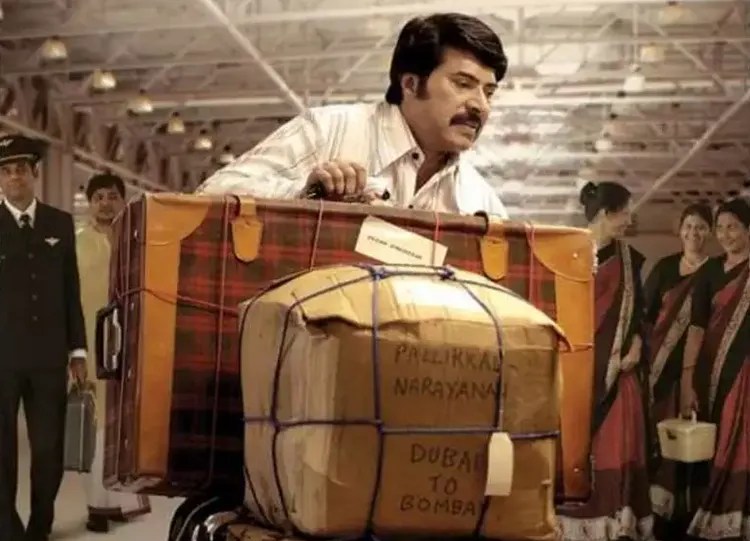
This educated unemployment has become a serious test of Kerala’s development. As a result of constantly struggling to create enough suitable jobs, a large numbers of Malayalis migrated abroad, especially to Gulf countries, in search of better employment opportunities. Over time, the “Gulf Malayali” became a familiar figure in Kerala’s social and cultural life and was often viewed as financially stable and highly desirable.

The theatrical release movie poster for the 2015 Malayalam film ‘Pathemari’, that depicts the socio-economic struggles of the Gulf Malayali. Image credits: The Kerala Paradox: From High Literacy to High Educated Unemployment

The Kerala- Gulf diaspora, numbering over two million people, has played a major role in the state’s economy. In 2019 alone, remittances from abroad brought in nearly $14–15 billion, boosting household income, consumption, and savings, and contributing significantly to economic growth. However, this migration also created a shortage of local workers in low-skilled sectors such as construction and coconut harvesting. These jobs are now largely filled by migrant workers from North-Eastern Indian states. This balance between skilled emigration and migrant labour inflow has become a key feature of Kerala’s economic development. But in the wake of oil crashes, visa cuts, and COVID slashing over 300,000 jobs since 2013, the Malayali’s diaspora’s dream has been fading. Then unemployment started hitting 26.5% as of May 2020 and now returning grads face empty promises with no high-skill gigs waiting.

Despite these rates, a gender gap in literacy seemingly continues to persist across India. Men consistently show higher literacy levels than women, reflecting long-standing social and economic inequalities in access to education. In states like Kerala, this gap is much smaller due to strong investments in education, but women still fall just behind men. In contrast, states with lower literacy levels show much wider differences, with far fewer women able to access basic education. This highlights that while progress has been made, achieving true gender equality in education remains an ongoing challenge. This in fact underlines the need for continued policy focus on gender equality in education.

Sources:

  • Mathrubhumi News, 2019.
  • The Kerala Paradox: From High Literacy to High Educated Unemployment
  • At 96.2%, Kerala tops literacy rate chart; Andhra Pradesh worst performer at 66.4%

Which European Country has the Best Education System?

Europe boasts strong schools, but one country stands out. Recent studies rank Estonia as number one for education quality and access. It scores a whopping 91.86 out of 100 which is way ahead of others. Curious why? Let’s dive into the details, from top test scores to smart daily routines.

Why Estonia Leads the Pack

Estonia shines in the Programme for International Student Assessment (PISA), run by the OECD. This tests 15-year-olds in math, reading, and science.

  • Top PISA marks: Estonia leads Europe with 509.95 in math, 511 in reading, and 525.81 in science.

  • Long school time: Kids average 13.55 years in education, plenty of time to build skills.

  • Smart spending: Government puts 14.35% of its budget into schools, fueling quality classes and tools.

  • Daily rhythm: School starts at 8 a.m., ends at 3 p.m. Lessons last 45 minutes with 10-minute breaks keeping young minds fresh, not fried.

This mix creates sharp thinkers ready for real-world challenges.

Close Rivals: Top 5 Breakdown

Estonia isn’t alone at the top. Here’s how the next best stack up:

RankCountryScore (Quality/Access)Key StrengthsSchool Day Notes
1Estonia91.861 in Math/Science PISA8am-3pm, short lessons + breaks
2Switzerland84.922 Math PISA8:30am-3:30pm, long lunch, Wed off
3Ireland84.781 reading PISA5h40m primary day incl. breaks
4United Kingdom81.90Strong science PISA8:30am-3pm, 45-min lunch
5Finland81.55#2 science PISAShort 5-hour days, 8am-2pm

The UK hits 4th with solid science scores and 13.41 years average schooling, but spends less (10.56%) whereas Finland keeps days short for balance.

What gives Estonia its sharp edge in education?

It’s all about smart choices, not just more hours. The country pours serious money into schools which is 14.35% of the national budget, ensuring modern classrooms, trained teachers, and cutting-edge tools like digital learning platforms that make lessons interactive and fun.

School days strike a perfect balance: starting fresh at 8 a.m. and wrapping by 3 p.m., with 45-minute classes broken by quick 10 -minute rests, something Sri Lankan school system lacks severely. This prevents burnout, letting kids absorb more without exhaustion, leading to those sky-high PISA scores (top in math and science across Europe).

Credits: