
Recent news circulating around a high-ranking Buddhist monk, Venerable Pallegama Hemarathana Thero, reveals a horrifying yet undeniable truth about sexual abuse, especially in a society that holds tremendous respect for elders and religion. This case, indeed, should be addressed through a more critical lens. In addition, shouldn’t we question whether parents, schools, religious institutes and the government are doing enough to provide comprehensive awareness, education and protection for vulnerable individuals?
Shouldn’t people, as a community, be worried that if monks and parents in today’s world can act in such cruel ways, who cannot and who will not?
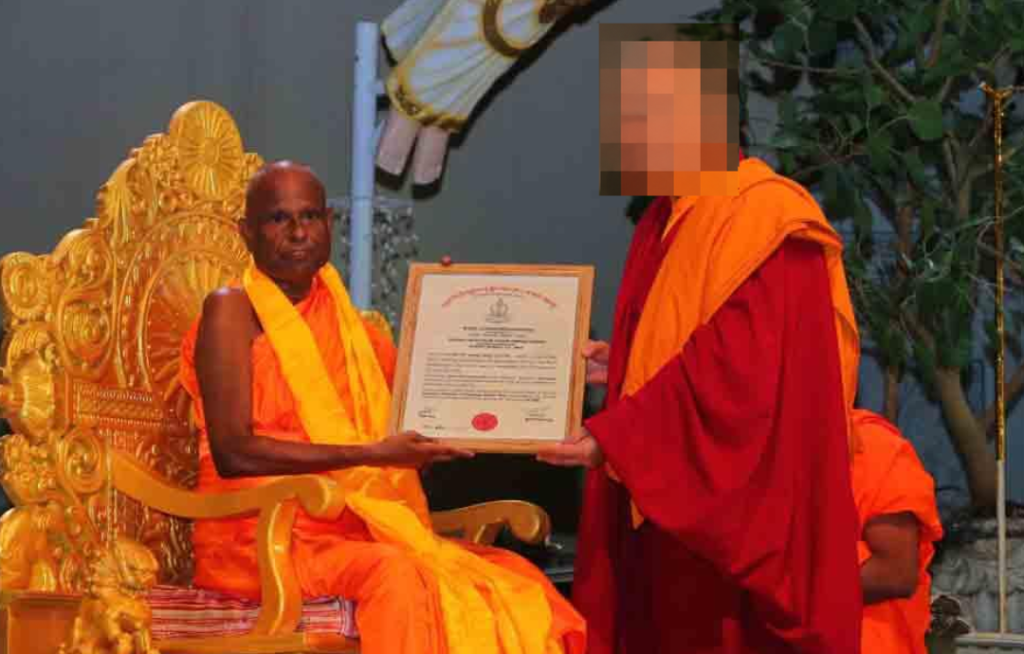
Ven. Pallegama Hemarathana Thero, a 71-year-old chief priest, was arrested on May 9, 2026, for allegedly sexually assaulting a 15-year-old girl. The alleged victim’s mother was accused of facilitating and abetting the abuse and was therefore also arrested and remanded in custody.
But, isn’t this case a hot topic that causes pain today because a Thero, a mother and her daughter were involved in it?
This child represents hundreds of children, women and men who are exposed to sexual violence every single day in silence, confusion and fear. Behind all these headlines, there is a much larger reality that victims struggle to speak about and the public fail to fully understand.
This raises a few urgent questions:
Are we truly educated enough about sexual violence?
How to identify it?
When to act against it?
Where the law stands when seeking justice?
Because as widespread as it is, sexual abuse cannot be defined in one sentence, nor can it be described by one act alone. Therefore, to be literate about sexual abuse is to be cautious and aware of any form of violent or non-consensual contact.
Therefore, with the aim of educating the pubic, this article explores the different forms of sexual abuse, the realities of victims when reporting abuse and the gaps and controversies that exist within Sri Lankan law and social awareness.
A recent 2026 survey done by the National Child Protection Authority (NCPA) revealed 144 reported cases related to child sexual abuse within just the first three months of the year. However, this only uncovers one side of a much darker reality because may cases still go unreported due to fear, shame, social stigma and lack of evidence. Sometimes, victims do not realize that what they went through was abuse.
| Type of Abuse | January | February | March |
| Grave Sexual Abuse | 3 | 7 | 7 |
| Sexual Exploitation | 1 | 0 | 0 |
| Rape | 8 | 16 | 20 |
| Sexual Harassment | 20 | 24 | 41 |
What do we really know about sexual violence?
According to the law, sexual abuse refers to any non-consensual sexual contact or behavior committed by a person or group of people. Terms such as rape, sexual assault, child sexual abuse, incest, sexual harassment and domestic violence are widely-recognized in society but many people remain unaware of the actions, behaviors and boundaries that define these crimes.
Today, society recognize sexual violence only through these labels because they lack the literacy to identify abusive bahiavior happening around them.
Now, why are we, as educated individuals, still unaware of the many different forms and realities of sexual abuse? Shouldn’t we address the act that are rarely spoken about or are trivialized to the point where society no longer even considers them abuse?
Therefore, it is important to educate ourselves about the different forms of sexual violence, the laws that exist surrounding them and the controversies and gaps that continue to exist within Sri Lankan legislation.
Rape
Rape is often defined as vaginal, oral or anal sex against a person’s will or without their consent.
The distinction between consensual sex and rape is simple: if a person says “No” and the other person still forces sexual activity upon them, it is rape. However, in Sri Lankan law, this distinction has become complicated, especially within the ranges of marriage.
Controversy I: Rape cannot happen within the context of marriage
According to the Sri Lankan Penal Code, it does not amount to “rape” if a husband has forceful sexual intercourse with his wife without her consent unless the couple is “judicially separated”. In this context of marriage, the notion of consent has become largely absent. Thus, this creates the presumption that the consent of the wife is irrelevant in regards of sexual intercourse within marriage.
Under the law, a perpetrator can still commit “rape” even with the victim’s consent but only if the consent is obtained unlawfully, through coercion, fear or deception. If the perpetrator is not her husband, it is “rape”, but if it is her husband, it is not.
Statutory Rape
Statutory rape is a criminal offense defined as sexual intercourse or contact with a person below the legal age of consent which is 16 years in Sri Lanka. It is rape regardless of whether the minor consented and participated in the contact willingly because according to the law, the minor is incapable of consenting to sexual activity.
Controversy II: Men cannot legally be recognized as rape victims under Sri Lankan law
While we can argue that forceful sex is still rape within marriage, it is also pivotal to examine another major gap within Sri Lankan law: a man cannot be legally recognized as a rape victim in the same way a woman can.
Gender-Biased Wordings
The law repeatedly phrases words like “a man” and “the male” to represent the perpetrator and “the woman” and “the female” to represent the victims. This male offender and female victim model further creates problems such as female offenders becoming legally invisible, male victims getting less recognized and LGBTQ victims not fitting to any law.
Within this law, the man is primarily identified as the perpetrator of sexual violence whereas a woman is always recognized as the victim. There is no legal offense for a woman if she conducts forceful sexual intercourse upon a man.
Controversy III: Gay sex or man forcing sexual intercourse upon another man can lead both parties to get criminalized
If a man forces sexual intercourse upon a man, the act is not prosecuted under rape laws. Instead, it falls under what the law describes as “Unnatural Carnal Offenses.” This criminalizes both the perpetrator and the victim, rather than recognizing the victim as a survivor of sexual abuse. There is no punishment if the victim faced a non-consensual contact with another man nor a woman.
Consensual same-sex relationships between two adults are labelled as “unnatural” and how it is also criminalized reflects the fact that this legal framework does not resonate with modern human rights and bodily autonomy.
This raises serious concers regarding consent, gender neutrality and equal legal protection for victims of sexual violence regardless of gender.
Sexual Assault
Sexual Assault is “legally” defined as sexual contact or touching occurring in a non-consensual manner. Sexual contact means any touching of the sexual or intimate parts of the body.
Sexual Harassment
Sexual Harassment refers to any unwanted requests for favors, verbal remarks, gestures or physical conduct that make the individual uncomfortable or intimidated. This includes many of the other variants of sexual violence including sexual assault and rape.
Among the many spaces where sexual harassment occurs, streets, public transports, workplaces and educational settings are often recognized as the hunting grounds where perpetrators prey on victims.
A 2011 survey conducted by the Legal Aid Commission found that 70% of women aged between 15 and 45 had experienced sexual harassment while using public transport. These women stated that they were reluctant to press charges and the conductors were unwilling to provide sufficient evidence against perpetrators in court proceedings.
The survey respondents reported experiencing the following forms of harassment:
| Abusive Experience | Percentage |
| Deliberate touching of any part of the body | 74% |
| Unwanted crowding of personal space eg: excessive closeness | 60% |
| Improper seating etiquette | 52.25% |
| Rubbing genitalia against another’s body | 52% |
| Asking for contact number | 48.72% |
| Trampling on foot deliberately | 48.44% |
| Fixated gaze on body parts | 46.28% |
| Suggestive/lascivious looks | 45.56% |
The respondents described their immediate emotional reactions as feeling “scared” (48%), “degraded and demeaned” (45%), “humiliated and embarrassed” (68%) and “angry” (74%).
Somehow, the law punishes such acts with imprisonment of either description for a term which may extend to five years or with a fine or with both and the offender may also be ordered to pay compensation of an amount determined by court to the person in respect of whom the offence was committed for the injuries caused to such person.
But has this ever truly been implemented effectively? Or, if these laws were properly enforced, would these women still feel discouraged from reporting such incidents?
Controversy IV: Reporting later makes no difference
A controversial reality about this is the issue of time lapse. Usually, when sexual violence occurred a long time ago, reporting it makes little to no difference legally. So, if a victim hesitated to report the incident at the time it happened because they felt afraid or guilty and later changed their mind after supposedly becoming more educated or emotionally prepared to speak up, the evidence may already have disappeared and therefore, reporting later makes no change.
Tragically, many victims and survivors of sexual harassment are often dismissed by society. They are told that they are “overthinking,” “being unreasonable,” “too sensitive” or that they “can’t take a joke.” Such reactions both trivialise and normalise abusive behavior while discouraging the victims from speaking up and seeking justice.
Stealthing
Stealthing is a form of rape that occurs when two people agree to use protection during sexual activity but one person either removes the protection (usually a condom) or lies about using one without the other person’s consent. Stealthing is considered as serious as rape and under English and Welsh law, it can carry a maximum sentence of life in prison. However, in Sri Lanka, stealthing is hardly recognized or openly addressed within the legal system.
Controversy V: Something similar to rape is unrecognisable within the Sri Lankan legal system despite its severe psychological, emotional and physical consequences on victims
Spiking
Spiking refers to the act of secretly adding alcohol, drugs, or intoxicating substances into another person’s drink or body without their knowledge or consent. Perpetrators often use spiking to weaken a victim’s awareness, memory or ability to resist, making it easier to commit sexual assault or other crimes against them.
In Sri Lanka, spiking-related sexual offenses can amount to serious criminal acts. If “a man” sexually assaults “a woman” while she is intoxicated, the law disregards any apparent consent given by “the woman” and punishes the offenders with life imprisonment.
Date Rape Drugs
“Date rape drugs” are drugs that have become known for their use by people who carry out spiking in order to rape or sexually assault someone. Some commonly known date rape drugs include Rohypnol, GHB, and GBL.
Although these terms are widely used socially and medically, they are not recognized as distinct legal categories under the law and rape and sexual assault do not associate with these as different categories.
Flashing/ exhibitionism
Flashing or exhibitionism refers to indecent exposure where a person reveals their private body parts to another person for sexual gratification or to intimidate, scare or make them feel uncomfortable.
Public awareness about flashing as a serious criminal offense increased following the viral incident involving @molsgonewild, a solo traveler from New Zealand, who recorded a “23-year-old man” asking her for sex and later exposing himself to her while she was parked on a coastal road in the Arugam Bay–Thirukkovil area on October 25.
Women and children are frequently subjected to such acts and there should be greater awareness and stronger enforcement and vocalization of punishments to encourage victims to speak when such indecency occurs.
A similar incident also involved the tourist @hugh.abroad, who shared a video of an uncomfortable encounter during his visit to Sri Lanka. In the video, viewers witnessed a woman touching the man inappropriately in ways that made him visibly uncomfortable. However, the public reaction to the incident was disheartening. Many people dismissed the tourist’s discomfort because he continued interacting with the woman and even gave her money. Seemingly, the incident was not reported as a sexual offense, possibly because the man did not press charges. Nevertheless, the incident still highlights the imbalance in how sexual violence against both men and women is perceived in society. Mae victims of harassment and assault are often trivialised, mocked or ignored instead of being treated with the same seriousness given to the female victims.
According to the Sri Lankan Penal Code, such acts can fall under offenses related to Gross Indecency between persons. Therefore, both men and women have the right to press charges against such behavior. It is important to emphasize that no one should hesitate to file complaints regardless of the circumstances because, regardless of how a victim reacts during or after the incident, the offender should still face consequences for their actions.
Incest
If close family members have sexual intercourse with each other, it is a crime called incest. It can be between:
- A parent – child
- A grandparent – grandchild
- brother – sister
- uncle/aunt – niece/nephew
- adopted family relations too
Even if adoption or marriage paperwork have defects in them, it still can count as incest. Also, trying to commit incest is also punishable.
For many victims, especially children and vulnerable individuals, the process of seeking legal justice can be exhausting, intimidating and emotionally draining. Delays, lack of sensitivity, social stigma, and institutional barriers may further discourage survivors from continuing with legal action.
As a result, many victims choose silence over a justice system that they fear may retraumatize them rather than protect them. But, staying silent is never the answer.
You can:
- Trust your instincts. If a comment, touch, gesture or action makes you uncomfortable, do not ignore your feelings or allow others to minimise them.
- Speak to a trusted person as soon as possible. This could be a parent, friend, teacher, counsellor, lawyer or support organisation. Early disclosure can help preserve evidence and provide emotional support.
- Document everything. Write down dates, times, locations, conversations, screenshots, messages, emails or any details related to the incident. Even if legal action is delayed, documentation can still support future reporting.
- Preserve evidence whenever possible. Avoid deleting messages, photographs, recordings or clothing connected to the incident, as they may become important later.
- Seek professional support. Therapy, counselling and survivor-support organisations can help victims process trauma, reduce self-blame and regain confidence.
- Learn about legal rights and reporting options. Victims should be educated on workplace policies, school procedures, child protection laws and criminal reporting mechanisms available in their country.
- Report the incident when safe and possible. Even if immediate legal action cannot guarantee punishment, reporting may still prevent the perpetrator from harming others and create an official record.
- Build supportive communities. Friends, families, schools and workplaces should listen without judgement and avoid dismissive responses such as “you’re overreacting” or “it was just a joke.”
- Encourage bystander intervention. People who witness harassment should safely intervene, support the victim and challenge inappropriate behaviour instead of remaining silent.
In Sri Lanka, complaints relating to sexual violence, harassment, domestic violence, child abuse, cyber exploitation and crimes against women and children can be directly reported to the Bureau for the Investigation of Abuse of Children & Women under the Sri Lanka Police.
The Bureau operates a 24-hour Public Complaint Desk that allows victims or witnesses to confidentially report incidents through:
- Emergency Hotline: 109
- Hotline: 011 244 4444
- Phone : 011 2337041
- Email: dir.cwbureau@police.gov.lk/ cwb.online@police.gov.lk
Importantly, victims can also seek help if:
- A police station refuses to accept their complaint.
- Proper investigations are not being conducted.
- They are facing intimidation or negligence during the reporting process.
Seeking justice may feel frightening, exhausting, and emotionally overwhelming, but remaining silent only allows abuse to continue unchecked. Awareness, reporting, and social support remain some of the strongest tools society has against sexual violence

