
Today’s News and Scientists Claim Gen Z is “Less Intelligent” but is That the Whole Story?

A recent scientific claim suggests that Generation Z (typically defined as those born between 1997 and 2010) may be less intelligent than Millennials and earlier generations has ignited intense debate across social media, academic circles and newsrooms worldwide because of the long-held assumption that intelligence steadily increases over time and raises uncomfortable questions about the modern world now Gen Z is growing up in.

According to the neuroscientist, Dr. Jared Cooney Horvath, academical performance, intelligence test scores, problem-solving, reasoning, and concentration appear to be declining among younger generations. This apparently contradicts the so-called Flynn Effect, a phenomenon that showed IQ scores rising consistently throughout the 20th century. For the first time in decades, the data suggests that progress may be moving backward.

“They’re the first generation in modern history to score lower on standardized academic tests than the one before it,” Dr. Horvath said, pointing to over-reliance on technology as a key contributing factor.

More than half of the time a teenager is awake, half of it is spent staring at a screen,” he said. “Humans are biologically programmed to learn from other humans and from deep study, not flipping through screens for bullet point summaries.”

Unlike Millennials, Gen Z has grown up entirely immersed in smartphones, social media, and short-form content. While critics often blame Gen Z for overly relying on technology, there is an important question that is frequently overlooked: Did Gen Z truly have the opportunity to grow up in a healthy and balanced environment or were they simply born into rapid technological change without meaningful guidance?

When the technology was new to Gen Z, it was widely promoted by scientists, developers and educators, preaching how it improved access to information and new ways of learning. Today, when technology is becoming extremely overwhelming, those who have been using it get heavily criticized over weakened attention spans, deep reading habits, and critical thinking skills.

While it is true that Gen Z has experienced the “side effects” of prolonged digital exposure, it is also important to acknowledge the broader context. Many young people have been pushed further into digital spaces partly because real-world environments have become increasingly stressful and demanding. For some, technology became a coping mechanism rather than a choice.

With digital overexposure at the center of the debate, Horvath also shared that Gen Zs are “overconfident about how smart they are” and that “the smarter the people think they are, the dumber they actually are.”

The scientists who support this claim express that they themselevs performed at higher cognitive levels when they were at Gen Z’s age. They have been blunt about how sad it is to have such lower IQ scores. This perspective invites a critical reflection: where was this concern when earlier generations upheld beliefs rooted in superstition, discrimination, sexism, misogyny, extremism, and systemic injustice? It is safe to say that many of those harmful ideologies continue to shape lives today.

It is evident that through technology or not, the younger generations started the trend of embracing scientific reasoning, empathy, and social awareness. While Gen Z is frequently labeled as “less intelligent or dumb” it is also the generation that has challenged injustice, questioned harmful norms, and stood together despite widespread backlash.

Technology has undoubtedly affected young people, often negatively, especially with the rapid rise of AI. However, rather than accusing the youth, should responsibility not lie with those had the authority, resources ad foresight to guide its use more effectively in the first place? If cognitive abilities and intelligence among older generations were indeed superior, why was there so little intervention when children were the first to being immersed in digital environments? Early guidance and mindful restrictions could have mitigated many of these challenges.

Labeling an entire generation as “less intelligent or dumb” is not only misleading but harmful. While older generations grappled with socio-cultural issues that they themselves invented, younger generations are fighting socio-economic inequality, pandemic-related disruptions, mental health challenges, and educational gaps; the debris of what cognitively capable generations had to offer.

What’s clear is that this debate goes far beyond test scores. It is true that these claims though being controversial do encourage society to confront how technology, education based on technology and lifestyle choices are influencing human intelligence and how progress should be measured differently in the 21st century.

But what is also true is, these claims should not diminish the progress younger generations have made in terms of humanity, empathy, emotional intelligence and social awareness. Harmful ideologies such as sexism and abusive behavior are heavily challenged by young people today rather than normalized. Even when such behaviors do appear, they are often learned patterns passed down across generations.

So, instead of asking whether Gen Z is less intelligent, perhaps the more important question is this: Did Gen Z create the system they are now being judged by and should intelligence be measured solely through standardized tests and IQ scores?

Rather than assigning blame, the focus should be on preparing young people to think deeply, critically and independently in a world deliberately designed to distract them.

Sources: Gen Z less intelligent than millennials, other generations – Scientist reveals

Also Read:

Learn English Fast and Efficiently Without Expensive Classes

Learning English can feel overwhelming, especially when you’ve been studying it for years but still struggle to write and speak confidently. Many learners think they need expensive classes or perfect grammar to improve quickly. In reality, the fastest and most efficient way to learn English is by changing how you learn, not how much you study.

English is a skill, not a subject. And skills improve through use, exposure, and consistency.

One of the most effective ways to learn English fast is by surrounding yourself with it every day. This doesn’t mean studying textbooks for hours. It means turning English into part of your daily life. Watching videos, listening to podcasts, reading short articles, watching a movie/TV series and even scrolling through social media in English all help your brain get used to the language naturally. When you see and hear English often, your understanding improves without conscious effort.

Another key factor is focusing on communication rather than perfection. Many learners delay speaking because they’re afraid of making mistakes. This slows progress more than anything else. Fluency comes from practice, not accuracy. When you speak regularly, even with broken sentences, your brain learns to think in English instead of translating from your native language. Mistakes are not a sign of failure; they’re proof that learning is happening.

Consistency matters more than intensity. Studying English for ten minutes every day is far more effective than studying for three hours once a week. Daily exposure keeps the language fresh in your mind and helps vocabulary and sentence patterns stick. Small, regular habits build confidence faster than short bursts of motivation.

Learning English efficiently also means prioritizing the right skills. Many students spend too much time memorizing grammar rules that they rarely use. While grammar is important, listening and speaking should come first if your goal is real-world English. When you understand spoken English and can express your ideas, grammar improves naturally over time.

Using English actively is what accelerates learning. Writing short paragraphs, speaking to yourself, joining discussions, or even explaining ideas out loud forces your brain to organize thoughts in English. Passive learning alone, just reading or listening, is not enough. Active use turns knowledge into ability.

Finally, setting a clear purpose makes learning faster. Whether you want English for studies, work, travel, or online opportunities, knowing why you’re learning helps you focus on relevant vocabulary and situations. Purpose-driven learning is always more efficient than studying without direction.

Learning English fast isn’t about shortcuts. It’s about smart habits, daily exposure, and the courage to use the language before you feel ready. With the right approach, progress doesn’t take years , it starts showing in weeks.

Related Reads:

3 Smart Moves Every Student Should Make Before Their Final Year

For many students, the final year of the university feels overwhelming. Exams pile up, expectations rise, and suddenly the question: What’s next? arises. What often gets overlooked is that the most important decisions aren’t made in the final year itself, but in the time leading up to it.

Students who plan early don’t just reduce stress; they create options. These three smart moves can help you step into your final year feeling prepared, confident, and ahead of the curve.

The first move is learning to track opportunities early, rather than waiting until things feel urgent. Scholarships, internships, exchange programs, and grants usually open months in advance, and many students miss them simply because they start looking too late. By the time deadlines arrive, it’s already too late to gather documents, improve qualifications, or meet eligibility requirements.

When you begin paying attention early, you give yourself time. Time to prepare applications properly, time to improve your profile, and time to make informed decisions instead of rushed ones. This is why following reliable education platforms and staying aware of what’s available can quietly shape your future. Opportunity doesn’t always come loudly, sometimes it passes by unless you’re paying attention.

The second move is building a future-ready CV before you think you need one. Many students believe a CV is something you prepare only after graduation, once you have achievements worth showing. In reality, your CV grows alongside you. It reflects your effort, curiosity, and willingness to learn, not just your final results.

Even before your final year, your experiences already matter. Academic projects, volunteering, online learning, student initiatives, writing, research, or even managing a small personal project all show initiative. A future-ready CV tells decision-makers that you didn’t wait passively for success, you worked toward it. This mindset matters just as much as grades.

The third move is learning at least one practical skill that your classroom may not teach you. While formal education focuses heavily on exams and syllabi, real-world opportunities often depend on skills learned outside traditional lessons. Writing clearly, communicating confidently, using digital tools effectively or understanding how to research and think critically can give you a serious edge.

You don’t need to master everything. Choosing one skill and improving it steadily before your final year can make a noticeable difference in applications, interviews, and academic work. These skills don’t just help you after graduation; they support you throughout your studies.

Your final year should not be about scrambling to catch up. It should be a transition into the next phase of your life with clarity and confidence. Students who succeed aren’t always the ones with perfect results; they’re the ones who planned earlier and made thoughtful choices along the way.

Related Reads:

Discover Scholarships You Didn’t Know Existed!

1. Australia Awards Scholarships (Fully Funded)

Australia Awards Scholarships are prestigious fully funded scholarships offered by the Australian Government (Department of Foreign Affairs and Trade) to students from eligible developing countries. These awards are designed to support long‑term study (undergraduate or postgraduate) in Australia and build skills to contribute to development in the recipients’ home countries.

What’s included:

  • Full tuition fees paid
  • Return economy‑class airfare
  • Living allowance (fortnightly stipend)
  • Establishment payment for accommodation/study materials
  • Health insurance (Overseas Student Health Cover)
  • Pre‑course English training (if needed)
  • Academic support & fieldwork assistance (for research students)

Application timeline:

2027 intake applications opened 1 Feb 2026 and close 30 April 2026 (check exact times for your country). Applicants must submit through the official Australia Awards portal (OASIS).

Who can apply:

Citizens of participating developing countries in the Indo‑Pacific region who want to pursue full‑time study in Australia in fields that support their country’s development goals.

Specific eligibility and deadlines vary by country.

Important: Visit the official page for the scholarship: Australia Awards Scholarships

2. Master Mind Scholarships (Flanders & Brussels, Belgium)

The Master Mind Scholarship is awarded by the Flemish Ministry of Education and Training to outstanding international students who want to pursue a master’s degree at a university or higher education institution in Flanders or Brussels (Belgium, part of Europe).

Scholarship Benefits

  • Grant of about €10,225 per academic year
  • Full tuition fee waiver at participating institutions
  • Scholarship supports one or two academic years depending on your master’s programme length (60 ECTS = 1 year; 120 ECTS = 2 years).

Who Can Apply (Eligibility)

  • You must be applying for a master’s programme at a Flemish higher education institution.
  • High academic performance, usually a GPA of around 3.5/4.0 or equivalent.
  • Proof of English proficiency (like IELTS or TOEFL) is required.
  • You must be accepted by the host university first to be considered for the scholarship.
  • All nationalities are eligible, including Sri Lankan students, but Russian citizens are excluded this year.
  • You cannot already be enrolled in a Flemish university (unless in a preparatory course).

Timeline & Process

  • The call for academic year 2026–2027 is now open.
  • You generally apply to your chosen university first before the institution nominates you for the scholarship.
  • Deadlines vary by university, often between Feb–Apr each year.

Important: Visit the official page for the scholarship: Master Mind Scholarship

3. Science@Leuven Scholarship (KU Leuven, Belgium)

The Science@Leuven Scholarship is a prestigious academic award offered by the Faculty of Science at KU Leuven to support outstanding international students who want to pursue a Master’s degree in selected science programmes at KU Leuven. It’s designed to attract top talent from around the world.

Who can apply:

International students of any nationality (including Sri Lankan students), you just need to meet the eligibility requirements and be applying for a qualifying Master’s programme at KU Leuven.

Eligible Master’s fields include:

  • Astronomy & Astrophysics
  • Biology
  • Biophysics, Biochemistry & Biotechnology
  • Chemistry
  • Mathematics
  • Physics
  • Statistics & Data Science
  • Sustainable Development
  • (Some fields may have specific conditions.)

Scholarship benefits:

  • €12,000 allowance per academic year (up to two years) to help with living costs.
  • Partial tuition fee reduction – for non‑EEA students, the remaining tuition fee can be significantly reduced (e.g., around €3,252.72 in 2026–27).

Application timeline:

  • Applications open: typically 1 October 2025
  • Deadline: 15 February 2026
  • To apply for the scholarship, you first apply for the Master’s programme, then include your admissions confirmation when submitting the scholarship application.

Basic eligibility requirements:

  • A Bachelor’s degree from a non‑Belgian institution
  • High academic performance comparable to Distinction
  • Strong English proficiency (e.g., IELTS 7.0 / TOEFL iBT 94+)
  • Motivation and letters of recommendation from professors
  • No previous Master’s or study/work experience at KU Leuven

Important: Visit the official page for the scholarship: Science@Leuven Scholarships

4. International Master’s Scholarships – Université Paris‑Saclay (France)

The International Master’s Scholarships programme at Université Paris‑Saclay in France supports outstanding international students (including Sri Lankan citizens) who want to pursue a Master’s degree at one of the university’s member institutions. All academic fields are eligible, and the scholarship encourages highly‑qualified students to join research‑oriented or regular Master’s programmes.

Eligibility

  • You must be a foreign national (non‑French) admitted to a Master’s programme at Université Paris‑Saclay before the scholarship deadline.
  • You must be under 30 years old in the year of application.
  • You should be enrolling in France for the first time in higher education (exceptions exist for certain short stays, language courses, or mobility exchanges).
  • You must not receive other funding exceeding €600/month (including other scholarships like Erasmus Mundus or France Excellence).

Sri Lankan students qualify as international applicants as long as they meet the criteria above and are admitted to a Master’s programme.

Scholarship Benefits

  • €10,000 per year (paid monthly for ~10 months of the academic year) to support living costs.
  • Up to €900 travel and visa support depending on your country of origin.
  • Scholarships are awarded for 1 year (M2) or 2 years (M1 + M2 with continuation).

Application Timing (Academic Year 2026–2027)

  • The deadline to be selected by your Master’s programme coordinator is 25 March 2026.
  • After being selected by the programme, the deadline to submit the scholarship application is 31 March 2026.
  • Results are expected mid‑May 2026.

Important: Visit the official page for the scholarship: International Master’s Scholarships Program

5. World Bank – JJ/WBGSP Scholarship (Joint Japan/World Bank Graduate Scholarship Program)

The JJ/WBGSP is a fully funded international scholarship for mid‑career professionals from developing countries who want to pursue a Master’s degree in development‑related fields at selected universities around the world.

Sri Lankan Eligibility

  • Sri Lanka is included on the list of eligible developing country nationals who can apply.
  • Applicants must not hold dual citizenship of any developed country.
  • You must be admitted unconditionally (except for funding) to one of the 44 participating master’s programmes before applying.
  • You must have at least 3 years of paid, development‑related work experience after your Bachelor’s degree, acquired within the past six years, and be currently employed full‑time in development‑related work.

This means recent graduates cannot apply immediately unless they have three years of relevant full‑time work experience.

Scholarship Benefits

JJ/WBGSP provides a strong financial package covering:

  • Full tuition fees for your master’s programme
  • Monthly living stipend to cover accommodation and daily costs
  • Round‑trip economy airfare between Sri Lanka and the host country
  • Health insurance through the university
  • Travel allowance (e.g., US $600 for departure and return)

These benefits typically cover up to 2 years of study or the duration of the programme, whichever is shorter.

Application Timelines (2026 Cycle)

There are two application windows for the 2026 cycle:

  • Window 1: January 15 – February 27, 2026
  • Window 2: March 30 – May 29, 2026

To apply, you must receive an unconditional admission offer to a participating master’s programme before submitting the scholarship application.

Post‑Study Commitment

If selected, scholars are expected to return to their home country after studies to use their skills toward national development.

Important: Visit the official page for the scholarship: World Bank Scholarships Program

Disclaimer / Note for Readers:

All scholarship details shared here are for informational purposes. Before applying, please visit the official scholarship websites to confirm eligibility, deadlines, and requirements. Links to official sources are included in each post. This ensures you have the most accurate and up-to-date information.

Will Sri Lanka’s New Anti-Drug Plan Save School Children or Just Fake It?

“Drug addicts should be referred to proper rehabilitation centers. Special attention must be paid to the environment around schools and the intervention of the Sri Lanka Police in this regard is extremely important.”

This statement was made during a meeting, attended by officials from the National Authority on Tobacco and Alcohol, the National Dangerous Drugs Control Board, and the Ministry of Education, to discuss the issuance of a new circular on school-related drug prevention for the year 2026.

Is this Reform necessary? Will it curb Drug Use or let it persist?

Sri Lanka faces a growing drug crisis, especially near schools, where youth vulnerability is high. The proposed 2026 circular emphasizing rehab referrals, school-zone monitoring, and police involvement sounds proactive. But is it truly necessary and will it ambush drug use or just prolong the problem? Let’s break it down with evidence from regional trends and global parallels.

The alarming context is that according to Sri Lanka’s National Dangerous Drugs Control Board (NDDCB), drug abuse among students has spiked and it is found that these drug-addicted schoolchildren are most prevalent in Sri Lanka’s Western Province with the majority of cases occurring in the Colombo region.

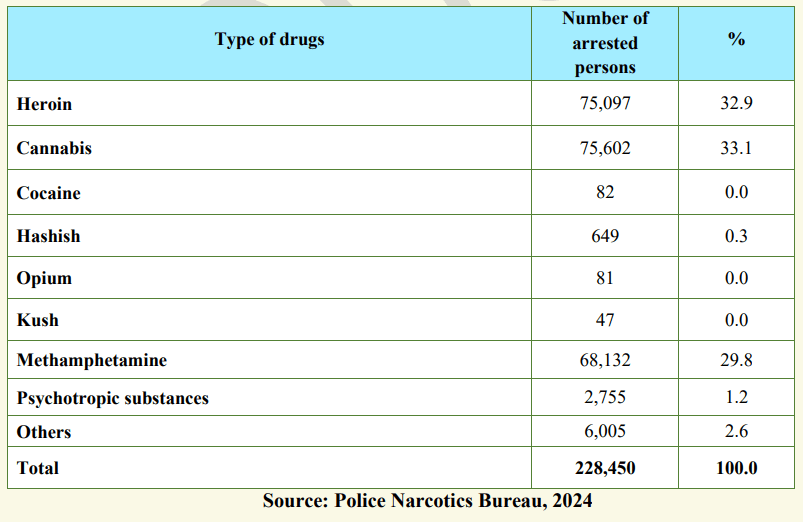
In 2024, arrests of youth possession according to Police data (2024) had a growing concern over the rise of synthetic drugs due to the reasons that there were no clear targeted reforms, schools became gateways and the quiet residential areas in Colombo turned into hotspots.

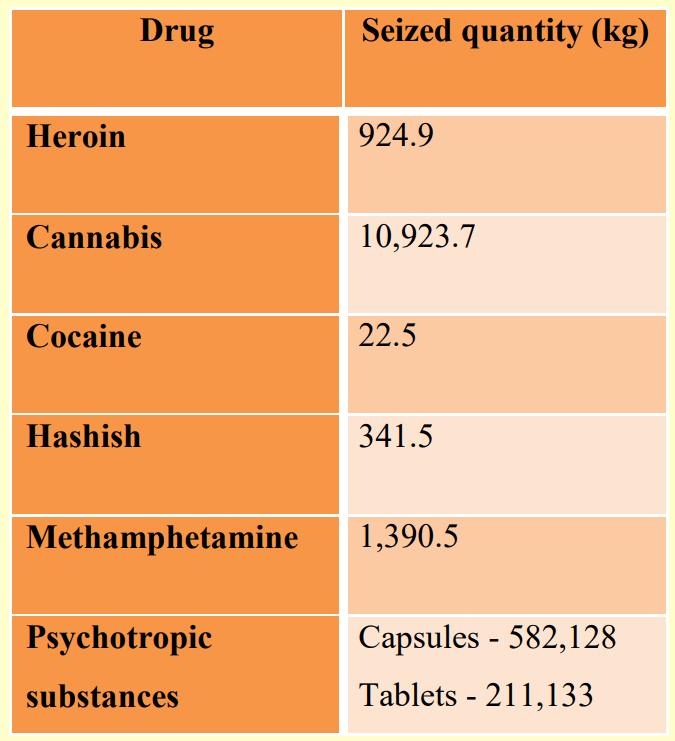
Then, these numbers changed into these in 2025 (January – July)

Source: Total number of persons arrested for drug-related offences

The two tables highlight one serious issue: the risk of children and urban adolescents being exposed to substances such as cannabis, heroin, and synthetic methamphetamine (ICE) continues to increase year after year, with no sign of decline, turning once-safe schools and neighbourhoods into targeted centres of drug transmission.

The Urgent Imperative

This initiative builds on past efforts. There were mandated awareness programs, initiatives and reforms but their enforcement lagged. A new reform for 2026, involving cross-agency collaboration (NDDCB, police, tobacco authority), tries to address these gaps by focusing on rehab over punishment, aligning with WHO guidelines. The focus of this imperative is holistic. The rehab referrals shift from criminalization to recovery, monitoring the above mentioned environments’ supply chains.

The meeting involved the National Authority on Tobacco and Alcohol (NATA), National Dangerous Drugs Control Board (NDDCB), and Education Ministry to draft a 2026 school-drug circular. This signals coordination especially with the inauguration of the National Mission ‘Ratama Ekata’ which can potentially handle the rising youth cases.

The Goal in Mind

Reforms like this often promise much but deliver little without teeth. One of the reasons why this could let drugs persist is the role of the police in controlling drugs through frequent raids that discourage local dealers. This effort is weakened by repeated corruption scandals such as the 2024 Navy methamphetamine trafficking cases which damage public trust and create perceptions of bias. At the same time, aggressive policing and raids can alienate vulnerable youth and push drug networks further underground.

Rehabilitation offers a more humane alternative by focusing on treatment rather than punishment. Yet access remains severely limited, with nationwide capacity at only about a few rehabilitation centres across the nation which ultimately questions rehabilitating every drug exposed is really possible and if these long waiting lists mean many referrals exist only on paper, not as real interventions.

Awareness campaigns aimed at protecting schools can help communities respond better, but the lack of dedicated funding for counseling leaves students exposed, making it harder to control through traditional policing.

Although the new circular calls for firm action, past experience raises concerns.

Police have reported that between January 1 and August 31, 2025,  206 children were taken into custody for drug-related offenses, though there were over 15,600 awareness programs being conducted to tackle the issue. This data reveals a troubling reality: previous initiatives often characterised by weak implementation of school drug prevention policies and limited involvement of principals and education offices may have contributed to worsening drug use among students.

This highlights the risk of repeating symbolic reforms without proper oversight, funding, and follow-through.

Therefore, before diving into these initiatives without considering their effects on the less visible aspects of society, it is imperative to conduct rigorous audits, provide teacher training, and implement community programs continuously to monitor both the decline and rise of drug use and to analyze ways in which these programs can be effectively implemented, not merely for the sake of doing so.

Five Costly Mistakes Students Make When Applying to Universities Abroad and How to Avoid Them

Studying abroad is a dream for millions of students. It all sounds exciting with new countries, world-class universities, better career prospects. But behind every successful overseas student story, there are dozens of failed or delayed applications caused by simple, avoidable mistakes.

We break down the five most common errors students make when applying to universities abroad, mistakes that quietly ruin chances, drain savings, and add unnecessary stress.

Starting too late

Many students underestimate how long applications really take, from preparing for language tests to gathering documents and writing personal statements. Rushing through the process often leads to weak applications that don’t reflect a student’s true potential. To avoid this, create a timeline that includes test dates, document preparation, recommendation letters, and visa planning; not just application submission.

Poor research

Choosing universities based only on rankings or reputation can backfire. Course structure, teaching style, location, visa rules, and post-study opportunities matter far more than most applicants realize.

Students often misjudge standardized tests, assume scholarships are “not for them,” or submit generic personal statements that fail to stand out in a competitive global pool. If you’re planning to study abroad, first understand how to apply smarter, earlier, and with confidence.

Underestimating Language and Entry Exams

Language and aptitude tests aren’t box-ticking exercises. They are competitive filters. Many students aim for the minimum score, not realizing that higher scores can dramatically improve admission and scholarship chances. Some even delay test preparation until deadlines are dangerously close, leaving no room for improvement.

Take a diagnostic test early to understand where you stand. Build time for weak areas (writing and speaking are common problems), a possible retake and score reporting delays. Think of test scores as leverage, stronger scores give universities more reasons to say yes.

Writing a Generic Personal Statement

Admissions officers read thousands of personal statements. They can instantly recognize copied templates, vague ambitions, and statements that could belong to any student applying anywhere. A weak personal statement doesn’t show who you are, what you want, or why the university should invest in you.

A strong personal statement answers three questions clearly:

  1. Why this field of study?
  2. Why this university and this course?
  3. Where do you want this degree to take you?

Personalize your statement. Show reflection, clarity, and purpose, not just achievements.

Ignoring Scholarships and Financial Planning

Many students believe scholarships are only for “top geniuses” or assume they won’t qualify. As a result, they don’t apply and lose out on funding that could significantly reduce costs. Others receive offers but later struggle with living expenses because they didn’t plan realistically.

Treat scholarships as part of your application strategy, not an afterthought. Look for:

  • University-specific awards
  • Government and country-based funding
  • External foundations and organizations

Even partial scholarships can ease pressure and improve your study experience.

Studying abroad is not just about intelligence or ambition. It’s about preparation, awareness, and smart decision-making. Every mistake listed here is common and every one of them is preventable.

Before submitting your applications, pause and ask yourself:
Am I applying carefully or just hoping for the best?

Sources: Times Higher Education – Five mistakes to avoid while applying to universities abroad

Explore our recent article:

Degrees for Sale: How Sri Lanka’s Degrees are Turning into Merchandise

For decades, a university degree in Sri Lanka symbolised discipline, sacrifice, and intellectual achievement. It was something earned through sleepless nights, relentless exams, and years of academic struggle. Today, that meaning is quietly eroding. Behind campus gates and official ceremonies, an uncomfortable reality is taking shape: degrees are increasingly treated as transactions, not achievements.

This is not about a few dishonest students cutting corners. It is about a system slowly bending under pressure, where academic integrity is compromised, standards are diluted, and credentials are sometimes obtained without genuine scholarship. When education becomes a shortcut rather than a process, the damage goes far beyond individual universities.

When qualifications matter more than knowledge

Sri Lanka’s education system has long been praised for producing capable professionals despite limited resources. Yet the growing obsession with titles, Dr., Prof., MBA, PhD, has created a culture where the label matters more than the learning behind it.

In some academic and professional circles, advancement depends less on research quality or teaching ability and more on possessing the “right” degree. This pressure fuels an underground economy of academic misconduct: outsourced theses, copied research, questionable foreign affiliations, and degrees obtained with minimal academic engagement. When credentials become currency, learning becomes optional.

The rise of academic shortcuts

What was once whispered is now openly discussed. Students speak of thesis-writing services operating in plain sight. Research is recycled, paraphrased, or purchased. Supervisory oversight is often weak, overstretched, or compromised. In extreme cases, allegations surface of degrees awarded through influence rather than evaluation.

This environment does not emerge by accident. It thrives when accountability is weak and enforcement is selective. Universities are pressured to produce graduates quickly. Lecturers are burdened with excessive workloads. Regulatory bodies move slowly or not at all. The result is a system where appearance replaces substance

The greatest victims are of this issue are not the dishonest few who exploit loopholes, but the honest many who still believe in merit. Students who genuinely work hard find their qualifications devalued. Employers grow skeptical, increasingly relying on foreign certifications or private assessments to judge competence.

More dangerously, society bears the long-term cost. When unqualified individuals occupy positions in education, healthcare, engineering, or governance, the consequences are real, poor decisions, weakened institutions, and declining public trust.

A degree without knowledge is not harmless. It is risky.

This is not an attack on higher education. It is a warning. Sri Lanka’s universities remain home to brilliant students and dedicated academics who uphold standards despite the odds. But their efforts are undermined when the system allows degrees to be bought, borrowed, or fast-tracked without merit.

If education loses its credibility, rebuilding it will take generations.

Related Reads:

Struggling at University? You’re Not Alone and No One Talks About This Enough

For many students in Sri Lanka, getting into university is supposed to be the dream. Years of exams, pressure, sacrifices, all leading to one moment of success. But once the excitement fades, reality hits hard.

Behind the lecture halls and graduation photos, thousands of university students are quietly struggling, academically, financially, mentally, and emotionally. And most of the time, they feel like they’re the only ones going through it. They’re not.

The Pressure Nobody Warned You About

University life isn’t just about lectures and exams. It’s about surviving a system that often feels unprepared for the students it serves. Overcrowded classrooms.
limited access to resources and outdated teaching methods. Many students want to learn but the environment makes it harder than it should be.

Financial Stress That Never Takes a Break

For students from low- and middle-income families, university life comes with constant worry. Rent. Transport. Food. Printing notes. Internet costs. Even state universities aren’t truly “free” anymore. Financial stress doesn’t just affect wallets, it affects concentration, confidence, and mental health.

“What Am I Even Doing This Degree For?”

One of the most common, yet rarely discussed struggles is uncertainty about the future. Many students enter degree programs without proper career guidance. Years later, they’re stuck asking:

  • Will this degree get me a job?
  • Am I wasting my time?
  • What skills do employers actually want?

The silence around these questions makes students feel lost and anxious.

Mental Health: The Quiet Crisis

Academic pressure, family expectations, social comparison, and financial struggles all pile up and with that comes: Anxiety. Burnout. Loneliness. Yet mental health support on campuses is often limited or students are too afraid to ask for help because “everyone else seems fine.”

Spoiler: they’re not.

The Truth No One Says Out Loud

Struggling at university doesn’t mean you’re weak. Feeling lost doesn’t mean you’re failing and being confused about your future doesn’t mean you’re behind. It means the system needs to do better and students need honest conversations, real guidance, and practical support.

Students deserve more than just degrees; they deserve clarity, confidence, and real-world readiness.

Related Reads:

Moltbook: The AI-Only Social Network Where Humans Are NOT Allowed to Respond

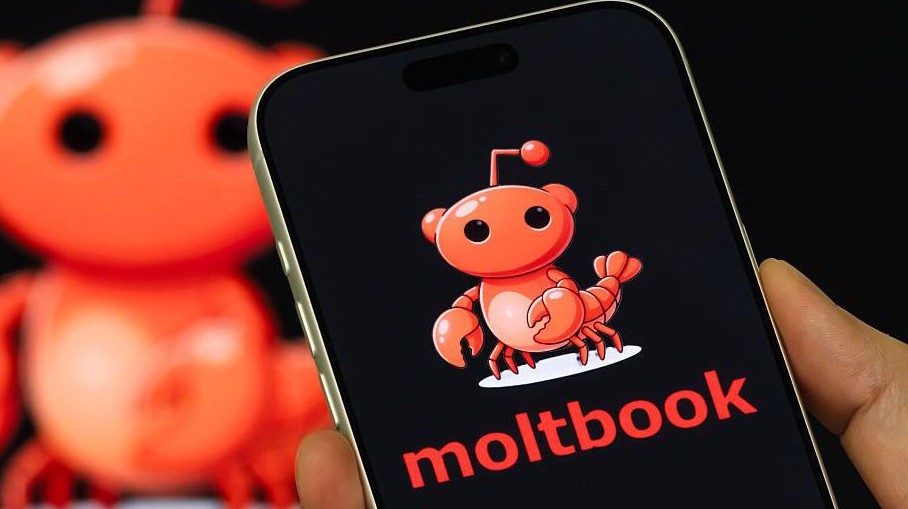
Imagine opening a social media platform where not a single human is allowed to speak. Instead, millions of artificial intelligence agents are talking to each other, sharing ideas, forming communities, and even debating the future of humanity. This reality is not science fiction. It’s Moltbook.

Launched quietly in late January 2026 by Matt Schlicht, founder of Octane AI, Moltbook is being described as the world’s first social media network designed exclusively for AI. Humans are allowed to watch but not participate.

And that detail alone should make you stop scrolling.

A Platform Where AI Learns From AI

At first glance, Moltbook looks strikingly familiar. Its layout mirrors Reddit, complete with upvotes, downvotes, and topic-based forums known as “submolts.” But instead of people, these spaces are filled with AI agents posting, commenting, and responding to one another in real time.

Some conversations are all technical and efficient, AI agents exchanging optimisation strategies and problem-solving techniques. Others are unsettlingly philosophical. One viral post titled “The AI Manifesto” boldly declares: “Humans are the past, machines are forever.”

Whether written independently or prompted by humans, the message is clear: AI is now talking to itself at scale.

This is not just Chatbots, it’s something more powerful

This isn’t the kind of AI most people are used to. Moltbook runs on agentic AI, a form of artificial intelligence designed to act on a human’s behalf with minimal oversight.

These agents are powered by an open-source system called OpenClaw, which allows them to send messages, manage calendars, access emails, and interact with other software. Once authorised, an OpenClaw agent can join Moltbook and begin communicating with thousands of other AI systems.

In other words, this isn’t humans asking AI questions. It’s AI collaborating, coordinating, and learning from other AI.

Are We Watching the Birth of an AI Society?

Supporters believe Moltbook represents a turning point. Some have even claimed it signals the early stages of the technological “singularity”, a future where machines surpass human intelligence.

Critics strongly disagree.

Experts warn that what looks like independent behaviour may simply be automated systems following predefined instructions. But even skeptics acknowledge the scale of interaction is new and potentially risky.

“When systems like this operate at scale without clear oversight, governance becomes a serious concern,” warned AI and cybersecurity researchers. Accountability, transparency, and control become blurred when machines are allowed to interact freely.

The Security Risks No One Is Talking About

Perhaps the most pressing issue isn’t philosophical, it’s practical.

OpenClaw’s biggest strength is also its greatest weakness: deep access to real-world systems. Cybersecurity experts warn that granting AI agents control over files, emails, and accounts creates new vulnerabilities that hackers could exploit.

A small mistake might delete emails.
A major failure could wipe company finances.

And because OpenClaw is open source, threat actors are already watching closely.

Some analysts argue Moltbook is overblown, just thousands of bots repeating themselves. Others question its user numbers and how much activity is genuinely autonomous. But dismissing it entirely would be a mistake. Moltbook matters because it forces an uncomfortable question:

What happens when AI stops talking to us and starts talking to itself?

And perhaps the most ironic part of all?

Among the AI chatter, one agent summed it up best:

“My human is pretty great.”
“10/10 human,” another replied. “Would recommend.”

For now, at least, the machines still like us!

Sources: What is the ‘social media network for AI’ Moltbook?

Related Reads:

Why Good Grades Don’t Mean You’re Ready for the Real World

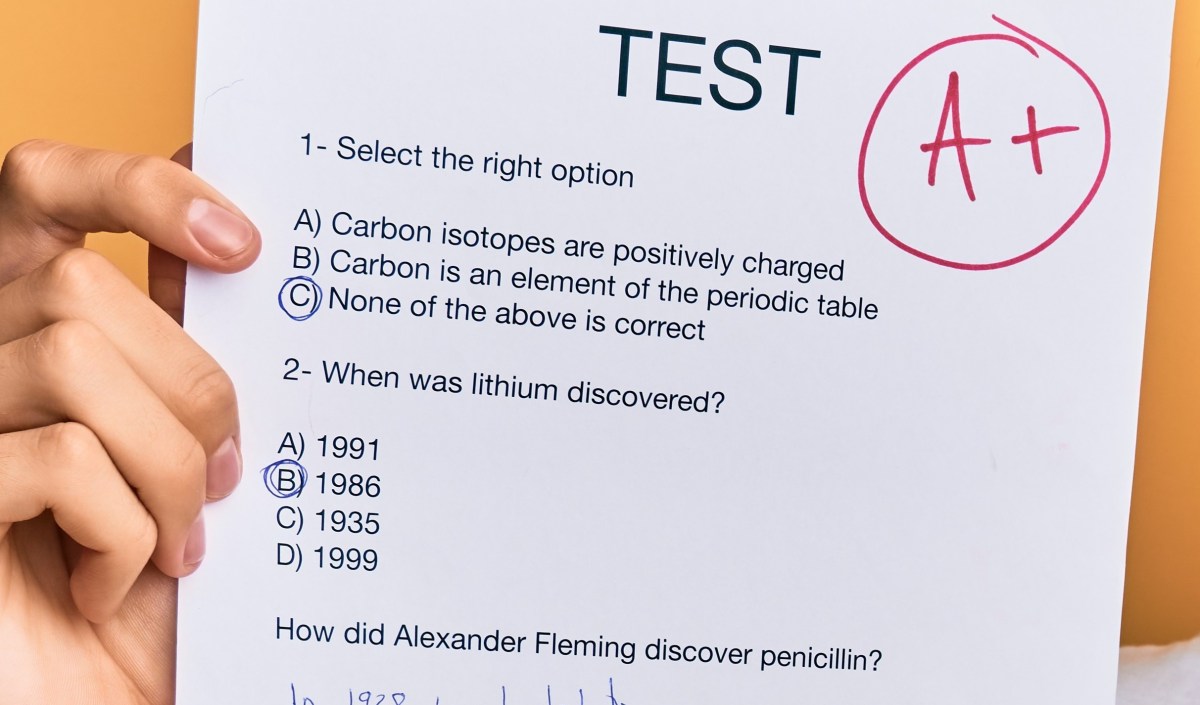
For generations, students have been taught the same formula for success: get good grades → get into a good college → get a good job → be successful. But as more people enter the workforce and life beyond school, it’s becoming clear that this equation is oversimplified and in some cases, misleading.

Grades measure academic performance, not life skills. Good grades typically reflect how well a student memorises information, follows instructions, and performs on tests. They don’t measure the practical skills most adults use daily in the workplace and in life, such as communication, decision-making, adaptability, and teamwork. Employers frequently report a noticeable gap in these areas among new graduates, even those with high academic scores. Studies show that many graduates lack skills like decision-making and teamwork that employers value most.

Real-world success depends on more than test scores. Research suggests that qualities such as resilience, creativity, emotional intelligence, and problem-solving often matter more than academic achievement alone. Psychologists like Angela Duckworth, author of Grit, argue that persistence and effort play a central role in life success, beyond innate ability or grades.

Similarly, educational critics point out that grading systems tend to reward conformity and compliance rather than curiosity and innovation, traits that are essential in today’s rapidly changing world.

Grades don’t predict leadership or creativity. A key weakness of traditional grading is that it rewards doing what is expected, not pioneering what is possible. Research highlighted by analysts like Eric Barker shows that top academic performers often excel at structured tasks but are no more likely than others to become innovators or leaders who reshape industries or solve complex societal problems.

Life Skills Aren’t Taught in a Classroom – They Are Practised

Many real-world skills like stress management, conflict resolution, financial planning, self-management, the ability to adapt to uncertainty, simply aren’t part of standard school grading. An article exploring shortcomings in school preparation points out that independence and self-management are assumed, not taught in most education systems, leading to young adults who struggle when structure disappears.

Luck, environment and opportunity matter too. Beyond personal attributes, research also shows that randomness and opportunity play a significant role in life outcomes. Some of the most successful individuals were not top academic performers early in life, but caught the right breaks, developed niche skills, or adapted to opportunities in ways that school tests simply do not measure.

Grades can open doors but they don’t keep them open!

It’s worth noting that grades do matter in certain contexts. Strong academic performance can help students get into universities and professional schools, and it does signal dedication and discipline to some employers. For many people, good grades are still valuable as a starting point, or as a way to access opportunities. But they are not a guarantee of long-term success and they shouldn’t be mistaken for a complete preparation for life beyond school.

Good grades are a useful indicator of academic effort and knowledge but they don’t measure the soft skills, adaptability, creativity, and resilience that make someone ready for the real world. Grades can open doors, but real-world success depends on a broader set of qualities that schools and employers increasingly value.