
Stuck Understanding English but Can’t Use It? Here’s How to Finally Break Through

You read articles easily. You understand English movies without subtitles.
You follow lectures, podcasts, even interviews. But when it’s time to write an email or speak in a meeting, everything freezes.

Your mind says, “I know this.” But your mouth and your fingers refuse to cooperate.

If you’re stuck at the “I can read and understand, but I can’t use it” stage, you’re not alone. Many Sri Lankans grow up learning English as a subject; not as a tool. We consume it. We pass exams in it. But we rarely live in it.

The shift from understanding to using English requires one uncomfortable thing: output with imperfection.

Here are five powerful, realistic ways to move from passive English to confident writing and speaking.

1. Accept That “Good English” Is Not the Same as “Perfect English”

One of the biggest blocks, especially in Sri Lanka, is fear of being judged. English here is often tied to status, education, and class. Many people hesitate because they don’t want to sound “wrong.”

But here’s the truth: Clear English is powerful. Perfect English is optional. Instead of aiming for advanced vocabulary, aim for clarity.

For example, if you want to use your English in an office email, you can say, “I’m writing to inform you about…”, instead “With reference to the aforementioned matter, I hereby wish to inform…”

To learn how to use English, make sure communication comes first and refinement later.

2. Start Thinking and Planning in English; not Just Translating

If you always think in Sinhala or Tamil and then translate into English, you create pressure and delay. That’s when your mind goes blank. Start small. Make English your thinking language in simple situations.

When you’re waiting for a train in Colombo Fort, think:
“The train is late again.”
“I need to finish my work today.”

When planning your day:
“I have to submit my assignment.”
“I should call my friend in the evening.”

Then take it one step further: write those thoughts down. Keep a small daily English journal. Not formal. Not perfect. Just honest.

For example:
“Today I felt stressed because I have two deadlines. I need to manage my time better.”

This builds fluency in writing and writing strengthens speaking because both require organizing thoughts.

3. Use English in Micro-Moments Every Day

You don’t need a debate stage. You need daily exposure to using it. In Sri Lanka, try practical situations like:

  • Ordering food in English at a café.
  • Asking a question in English at a bookstore.
  • Commenting in English on LinkedIn or Facebook.
  • Writing Instagram captions in English instead of Sinhala for practice.

If you’re a student, volunteer to write part of the group report. If you’re working, send one email in clear English instead of short phrases. The goal isn’t to sound impressive. The goal is to normalize using English in real life.

When something becomes normal, fear reduces.

4. Practice Structured Speaking and Structured Writing

Many learners try to “just speak” or “just write” randomly. That’s overwhelming. Instead, use structure.

For speaking, use simple frameworks:

  • “I agree because…”
  • “In my opinion…”
  • “The main reason is…”

For writing, follow mini-structures:

  • Start with the main point.
  • Add one reason.
  • Add one example.

For example:

“In my opinion, online learning has advantages. It saves travel time, especially for students in rural areas like Anuradhapura or Monaragala. They can access lectures without relocating.”

Likewise, make it clear, organized and confident. Structure reduces panic. When you know how to build a sentence, you stop freezing.

5. Create Consistent Output, Even If It Feels Awkward

Here’s the real turning point: you must produce English regularly. Not once a week. Not only before exams but daily.

Try this routine:

  • 5 minutes speaking (talk about your day out loud).
  • 5 minutes writing (short paragraph or reflection).
  • 5 minutes reading something slightly above your level.

You can even record yourself explaining a news story from News 1st or summarizing something you read on BBC News. Then write a short paragraph about it. It will feel uncomfortable at first. That’s normal.

The stage you’re in right now is not lack of knowledge; it’s lack of muscle memory. English is like going to the gym. Reading is watching workout videos.
Speaking and writing are actually lifting the weights.

You don’t become strong by watching.
You become strong by doing, even badly, again and again.

If you can understand English, you are already 70% there. The last 30% is courage, repetition, and consistency.

When English stops being a subject, it becomes a skill you truly own.

Related Reads:

Sri Lanka’s 2026: Rule of Law and Drug-Free Future

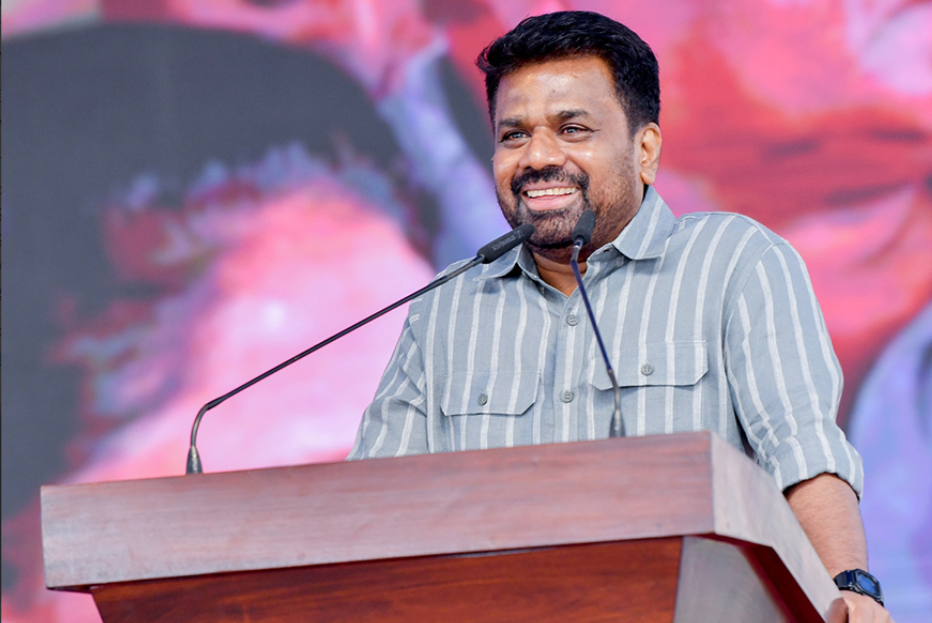
“We are building a country where no child becomes a victim of the drug menace”, stated the President.

President Anura Kumara Dissanayake delivered a powerful message during the Central Province launch of the “A Nation United” anti-drug campaign, emphasizing that this year will breathe life into the principle of equality before the law. He warned that when the rule of law collapses, it hands power to criminals, stifling national development and trapping citizens in poverty. This speech underscores a pivotal shift for Sri Lanka, blending anti-drug efforts with broader governance reforms.

The initiative, “A Nation United” rallies political leaders, tri-forces, police, and communities to eradicate drug networks through arrests, awareness drives, and rehabilitation programs. Key achievements include over 91,000 suspects apprehended, 1,818 held in long-term detention, and 1,566 individuals referred for rehab since its start. Notably, 62 police officers in Nuwara Eliya received commendations for their frontline efforts.

Educationally, this campaign teaches the ripple effects of drugs: they fuel street crime, breed corruption, and even infiltrate politics, eroding societal trust. By involving religious leaders, teachers, and parents, it promotes collective responsibility, showing young people that vigilance at home and school prevents addiction’s grip.

The President stressed that true equality means no one, regardless of status, escapes justice, a lesson drawn from past failures where impunity bred chaos. This principle isn’t just legal; it’s economic. A stable rule of law attracts investment, reduces crime-related costs, and empowers citizens to thrive. For students and educators, it’s a real-world civics lesson: strong institutions protect the vulnerable and pave the way for innovation.

Reflecting on recent crises like Cyclone Ditwah, which caused 4.1 billion US dollars in damage, the President highlighted funding reconstruction without new debt, a model of prudent governance. Future plans include a non-aligned foreign policy to safeguard sovereignty, a Rs. 330 billion public service salary increase for efficiency, and enhanced allowances for armed forces after 2027.

Related Reads:

Do You Also Feel Like You’re Running Out of Time?

Do you ever feel like everyone else is moving ahead while you are somehow falling behind? Like the clock is ticking louder for you than for everyone else? Though this can come from career milestones, relationships, financial stability, academic achievements, or personal goals, the pressure to “be somewhere” by a certain age has quietly become one of the most stressful burdens of modern life.

If you feel like you are running out of time, you are not alone. But more importantly, you may not actually be behind.

The Illusion of the Timeline

From a young age, we are subtly handed a timeline. Graduate by this age. Get a stable job by that age. Be successful before 30. Build something impressive before 40. These expectations are rarely questioned, yet they shape how we measure our worth. Social media amplifies this pressure by constantly showcasing highlight reels of other people’s achievements, making it seem as though success has a universal deadline.

The problem is that life does not operate on a fixed schedule. Timelines are social constructs, not biological truths. People grow, succeed, fail, restart, and reinvent themselves at dramatically different stages of life. Comparing your chapter three to someone else’s chapter ten creates unnecessary anxiety.

Why the Feeling Feels So Real

The sensation of “running out of time” is often rooted in fear, fear of missed opportunities, fear of regret, fear of being judged, or fear of not reaching your potential. When we constantly think about what we have not done yet, our brain shifts into threat mode. This creates urgency, stress, and self-doubt.

Ironically, this mental pressure can slow progress. Instead of focusing on meaningful action, we become overwhelmed by the gap between where we are and where we think we should be. The more we panic about time, the less effectively we use it.

Productivity Is Not the Same as Purpose

Another reason this feeling persists is the confusion between busyness and progress. Being constantly busy can create the illusion that we are moving forward, but not all activity leads to growth. When we chase productivity without clarity, we exhaust ourselves while still feeling behind.

True progress begins when you define what actually matters to you. Are your goals genuinely yours, or are they shaped by external expectations? When your direction is aligned with your values, the pressure of time begins to lose its intensity.

You Are Not Late; You Are Learning

Every phase of life teaches something essential. Periods of uncertainty build resilience. Detours develop perspective. Slow seasons create clarity. What may feel like “lost time” often becomes foundational experience later.

Many successful individuals reached their breakthroughs later than society would consider ideal. Some changed careers in their 40s or 50s. Others discovered their purpose after years of confusion. Growth is rarely linear, and progress is rarely visible in real time.

Reclaim Your Sense of Time

Instead of asking, “Am I running out of time?” try asking, “What can I do with the time I have today?” Shifting from fear to intention changes everything.

Start by narrowing your focus. You do not need to fix your entire life this year. You need to move one meaningful step forward today. When you concentrate on small, consistent actions rather than distant outcomes, time begins to feel like an ally instead of an enemy.

Reduce comparison where possible. Curate your digital environment. Spend more time measuring yourself against your past version rather than someone else’s present highlight.

Most importantly, give yourself permission to grow at your own pace. Life is not a race with a universal finish line. It is a personal journey with different routes, speeds, and destinations.

Related Reads:

Procrastinating? Follow These 5 Steps to Successfully Overcome It

Procrastination is often misunderstood as laziness or poor time management, but in reality, it is usually a coping mechanism. When we delay tasks, we are not avoiding the work itself. We are avoiding the uncomfortable emotions attached to it. Fear of failure, perfectionism, self-doubt, boredom, or feeling overwhelmed can trigger a stress response in the brain. To protect us from discomfort, the brain chooses immediate relief, such as scrolling on social media or doing less important tasks, instead of long-term achievement.

To stop procrastination effectively, the solution must address both the emotional and practical aspects of the behavior. Below are five evidence-based and realistic strategies that work.

1. Break Tasks Into Clearly Defined, Manageable Steps

One of the main reasons people procrastinate is because tasks feel vague and overwhelming. When a goal is unclear, the brain perceives it as a threat, which increases avoidance. Instead of writing “complete project” on your to-do list, define the exact first action you need to take.

For example, open the document, outline three key points, or research one source. By shrinking the task into concrete and manageable steps, you reduce psychological resistance and make starting far less intimidating.

2. Focus on Starting, Not Finishing

Many people delay work because they are fixated on the size of the final outcome. This creates pressure and triggers perfectionism. Instead, shift your attention to simply beginning the task. Commit to working for a short, defined period; even 10 or 15 minutes is enough. Once you start, momentum naturally builds, and continuing becomes easier than stopping. Progress is driven by initiation, not by waiting for the perfect mental state.

3. Design an Environment That Supports Focus

Willpower is unreliable, but environment is powerful. If your phone is within reach, notifications are on, and your workspace is cluttered, your brain will constantly seek distraction. Creating a focused environment such as placing your phone in another room, clearing unnecessary tabs on your computer, and setting a specific workspace for deep work significantly reduces temptation. When distractions are less accessible, productivity becomes the easier choice.

4. Address Perfectionism and Fear of Failure

Procrastination is often fueled by the belief that work must be done perfectly or not at all. This all-or-nothing thinking creates anxiety, which leads to avoidance. Instead, aim for progress over perfection. Allow yourself to produce a “first draft” version of your work without judgment. High-quality outcomes usually come from editing and refinement, not from waiting for flawless execution on the first attempt.

5. Build Consistency Through Identity, Not Motivation

Relying on motivation is ineffective because motivation fluctuates. A more sustainable approach is to focus on identity. Rather than saying, “I need to study today,” shift to, “I am becoming someone who studies consistently.” When actions align with your chosen identity, consistency strengthens. Small daily actions compound over time and gradually eliminate procrastination patterns.

Procrastination does not disappear overnight, but when tasks are clear, starting feels manageable, and self-judgment is replaced with structured action, productivity becomes a habit rather than a struggle.

The Gap Between Local and International Education

Sri Lanka is often proud of its “free education” system and high literacy rates. Yet beneath these numbers lies an education system struggling with language barriers, structural bottlenecks, inequality, and outdated practices. Without proper reform, these problems have been deepening and limiting the school children’s knowledge, hindering their personal as well as professional success.

Let’s properly address this gap.

1. English Proficiency: A National Bottleneck

Though in government schools, basic English is taught from early grades, true proficiency remains low. Only about 22% of Sri Lankan adults are literate in English, which severely limits access to global knowledge, research, and digital resources that are overwhelmingly in English.

Moreover, 87% of schoolchildren lack access to trained English teachers, especially in rural and estate areas, leaving vast swathes of students behind. This creates a self-reinforcing cycle where students’ English is only examined in the English subject,restricting them from truly learning English. This lack of exposure continues to trouble students even after entering higher studies because university instruction is largely English-based. Many undergraduates feel like entering a whole new world that heavily requires a good agency over English. Also, up-to-date materials, and technology become inaccessible to them because their English skills were never developed.

International schools ,on the other hand, typically use English as the primary language of instruction from the very beginning, meaning students learn subjects like Math, Science, History, and even classroom communication entirely in English. This immersion method helps students develop fluency naturally, as they are constantly reading, writing, speaking, and thinking in English throughout the day.

Teachers are often trained in international curricula such as Cambridge or IB, where English proficiency is essential, and classrooms encourage discussions, presentations, and critical thinking in English. As a result, students’ access to the world beyond traditional and narrow learning techniques gets broader day by day.

Proficiency in English is not just about language; it’s about access, opportunity, and equity. That’s why teaching English properly is just as important as teaching one’s mother-tongue.

2. The O/L-A/L System Creates Delay and Inequality

Sri Lanka’s school system is heavily exam-centric, culminating in the G.C.E. Advanced Level (A/L), through which only a small fraction gain entry into universities. Government schools sole purpose is to guide their students score high marks for major examinations. This ultimately makes these students puppets that act according to the puppeteers’ commands. Because of this, there are students repeating A/Ls multiple times, delayed entry into the workforce (often finishing university years later than global peers) and private tuition dependence as a de facto pathway to passing exams.

This effect doe not seem to be practised in international schools and that deepens inequality: children from wealthy families (who can afford international edcation) are far more likely to succeed than those from poorer regions.

3. Resources and Teaching Methods

Another major difference lies in resources and teaching methods. International schools generally have better facilities such as modern classrooms, digital learning tools, updated libraries, smaller class sizes, and teachers trained in global curricula. Their teaching style is often interactive and student-centered, focusing on discussions, presentations, critical thinking, and practical application of lessons.

In contrast, many government schools face limited resources, larger classrooms, and fewer technological tools. Teaching is often more exam-oriented and lecture-based, with greater emphasis on memorization rather than skill development. This difference in infrastructure and approach can significantly affect the overall learning experience and student outcomes.

What Real Reform Could Look Like

Schools can prioritize English language from early grades where creating true bilingual capability, not just “English subject” would open access to global information and opportunities.

Rethinking the A/L gatekeeper model is also equally essential because combining or replacing A/Ls with broader pathways like credit-based systems, modular evaluation, community college preparation guide students to build wider competencies instead of memorizing to pass a high-stakes exam.

Integrating broader core learning, including critical thinking, foundational science, digital literacy, and humanities earlier, across streams, would help students become more adaptable globally.

Schools should also democratize digital & online resources where high-quality learning content (in both English and Sinhala) are available free online, paired with in-school guided implementation that could reduce dependence on costly tuition and support equity.

Sri Lanka’s education system still carries structural legacies of a centralized, exam-oriented model that doesn’t reflect the needs of the 21st century economy. Language barriers, inequality, and outdated practices collectively limit the nation’s potential.

Related Reads:

The 20-Minute Rule That Could Save Your Relationship This Valentine’s

Why do some couples survive explosive fights while others slowly fall apart? It’s not because they fight less. It’s not because they “found the perfect person” and it’s definitely not because they agree on everything.

According to world-renowned psychologist Dr. John Gottman, the real difference comes down to something surprisingly simple: How quickly they recover.

The Hidden Danger After an Argument

When couples argue, their bodies react as if they’re facing a real threat. Heart rate increases. Stress hormones flood the system. The nervous system shifts into fight-or-flight mode.

And the problem happens when the longer you stay in that heightened state, the harder it becomes to feel empathy, listen properly, solve problems and offer emotional repair. Your body starts treating your partner like the enemy, even if your heart knows they aren’t.

Gottman’s research found that couples who remained physiologically activated after conflict experienced steep drops in relationship satisfaction over time. It wasn’t the argument that destroyed them.

It was the lack of recovery.

The 20-Minute Reset That Changes Everything

The helpful part is couples who took just 20 minutes to calm their nervous system were able to return to the conversation regulated and emotionally available.

Twenty minutes of

Not ignoring the issue.
Not suppressing feelings.
Not walking away forever.

Just pausing long enough for the body to reset.

When your nervous system calms down, empathy becomes accessible again, you can actually hear what your partner is saying, repair becomes possible and connection can rebuild. So, instead of trying to win the argument, you protect the relationship.

With Valentine’s Day Around the Corner…

Everyone talks about flowers, gifts, and romantic dinners. But the healthiest relationships aren’t built on one perfect day.

They’re built on moments like choosing to pause, choosing to regulate and choosing to repair.

So instead of proving your point this Valentine’s, try proving your commitment and the next time an argument escalates, say: “Let’s take 20 minutes and come back to this.”

That one sentence might be more powerful than any grand gesture.

Love is not all about grand gestures and sweet talks. It’s about learning how to return to each other after fights and choose to repair what just got broken. The strongest couples aren’t the ones who never fight. They’re the ones who know how to reset.

Always Tired? Your Body is Probably Asking for These Sri Lankan Magnesium-Packed Snacks!

Struggling with fatigue, muscle cramps, or stress in the hustle of Colombo or Kandy life? Magnesium-rich local snacks can recharge you naturally, using everyday Sri Lankan ingredients straight from markets like Pettah or roadside vendors.

Magnesium supports nerve function, eases tension from long commutes, and fights deficiencies common in rice-heavy Sri Lankan diets. Adults need about 300-400mg daily; our picks deliver 50-150mg per serving. Grab these for quick boosts during festivals or work breaks.

Top 8 Local Magnesium Snacks

  • Pumpkin Seeds : Roast a handful (150mg magnesium/oz) with chili for a spicy crunch, perfect with tea.

  • Cashews : Fresh from Matale farms (80mg/oz), snack raw or in trail mix with local dried mango.

  • Mango with Chili: Slice ripe Ambul (75mg/cup) and sprinkle seeni sambol, sweet heat that beats imported bars.

  • Roasted Chickpeas (Kadala): Spice with curry leaves (80mg/cup), a street-food staple for sustained energy.

  • Coconut Sambol: Grated pol (50mg/serving) mixed with maldive fish, pairs with roti for 100mg boost.

  • Spinach Mallum: Quick wilted kankun (80mg/cup) with coconut, ideal lunchbox filler from home gardens.

  • Peanuts : Boiled or roasted (60mg/oz), toss with pol sambol for a budget-friendly hit.

  • Banana : Kolikuttu variety (30mg each) smeared with peanut butter, ubiquitous and muscle-soothing.

Regular intake helps regulate blood sugar, reducing cravings that derail diets. It eases PMS symptoms like bloating and mood swings by balancing hormones. Athletes benefit from faster recovery as magnesium aids protein synthesis and cuts inflammation. Long-term, it lowers risks of migraines, hypertension, and osteoporosis through better calcium absorption.

Start your day with almonds in oatmeal (adds 75mg). Mid-morning, grab edamame pods (100mg). Afternoon slump? Dark chocolate and banana (95mg total). Evening wind-down: Avocado half (45mg) curbs late-night munchies. Track intake via apps to hit 300mg+ effortlessly—combine two snacks daily for optimal results.

You can also pair with vitamin D sources like sunlight or fortified milk for better absorption. Hydrate well, as magnesium works with electrolytes. Those with kidney issues should consult doctors before ramping up intake. Experiment with flavors like cinnamon on seeds or chili on chickpeas can also keep it exciting.

Fuel your body right and notice sharper focus, calmer nerves, and vibrant energy within days.

Today’s News and Scientists Claim Gen Z is “Less Intelligent” but is That the Whole Story?

A recent scientific claim suggests that Generation Z (typically defined as those born between 1997 and 2010) may be less intelligent than Millennials and earlier generations has ignited intense debate across social media, academic circles and newsrooms worldwide because of the long-held assumption that intelligence steadily increases over time and raises uncomfortable questions about the modern world now Gen Z is growing up in.

According to the neuroscientist, Dr. Jared Cooney Horvath, academical performance, intelligence test scores, problem-solving, reasoning, and concentration appear to be declining among younger generations. This apparently contradicts the so-called Flynn Effect, a phenomenon that showed IQ scores rising consistently throughout the 20th century. For the first time in decades, the data suggests that progress may be moving backward.

“They’re the first generation in modern history to score lower on standardized academic tests than the one before it,” Dr. Horvath said, pointing to over-reliance on technology as a key contributing factor.

More than half of the time a teenager is awake, half of it is spent staring at a screen,” he said. “Humans are biologically programmed to learn from other humans and from deep study, not flipping through screens for bullet point summaries.”

Unlike Millennials, Gen Z has grown up entirely immersed in smartphones, social media, and short-form content. While critics often blame Gen Z for overly relying on technology, there is an important question that is frequently overlooked: Did Gen Z truly have the opportunity to grow up in a healthy and balanced environment or were they simply born into rapid technological change without meaningful guidance?

When the technology was new to Gen Z, it was widely promoted by scientists, developers and educators, preaching how it improved access to information and new ways of learning. Today, when technology is becoming extremely overwhelming, those who have been using it get heavily criticized over weakened attention spans, deep reading habits, and critical thinking skills.

While it is true that Gen Z has experienced the “side effects” of prolonged digital exposure, it is also important to acknowledge the broader context. Many young people have been pushed further into digital spaces partly because real-world environments have become increasingly stressful and demanding. For some, technology became a coping mechanism rather than a choice.

With digital overexposure at the center of the debate, Horvath also shared that Gen Zs are “overconfident about how smart they are” and that “the smarter the people think they are, the dumber they actually are.”

The scientists who support this claim express that they themselevs performed at higher cognitive levels when they were at Gen Z’s age. They have been blunt about how sad it is to have such lower IQ scores. This perspective invites a critical reflection: where was this concern when earlier generations upheld beliefs rooted in superstition, discrimination, sexism, misogyny, extremism, and systemic injustice? It is safe to say that many of those harmful ideologies continue to shape lives today.

It is evident that through technology or not, the younger generations started the trend of embracing scientific reasoning, empathy, and social awareness. While Gen Z is frequently labeled as “less intelligent or dumb” it is also the generation that has challenged injustice, questioned harmful norms, and stood together despite widespread backlash.

Technology has undoubtedly affected young people, often negatively, especially with the rapid rise of AI. However, rather than accusing the youth, should responsibility not lie with those had the authority, resources ad foresight to guide its use more effectively in the first place? If cognitive abilities and intelligence among older generations were indeed superior, why was there so little intervention when children were the first to being immersed in digital environments? Early guidance and mindful restrictions could have mitigated many of these challenges.

Labeling an entire generation as “less intelligent or dumb” is not only misleading but harmful. While older generations grappled with socio-cultural issues that they themselves invented, younger generations are fighting socio-economic inequality, pandemic-related disruptions, mental health challenges, and educational gaps; the debris of what cognitively capable generations had to offer.

What’s clear is that this debate goes far beyond test scores. It is true that these claims though being controversial do encourage society to confront how technology, education based on technology and lifestyle choices are influencing human intelligence and how progress should be measured differently in the 21st century.

But what is also true is, these claims should not diminish the progress younger generations have made in terms of humanity, empathy, emotional intelligence and social awareness. Harmful ideologies such as sexism and abusive behavior are heavily challenged by young people today rather than normalized. Even when such behaviors do appear, they are often learned patterns passed down across generations.

So, instead of asking whether Gen Z is less intelligent, perhaps the more important question is this: Did Gen Z create the system they are now being judged by and should intelligence be measured solely through standardized tests and IQ scores?

Rather than assigning blame, the focus should be on preparing young people to think deeply, critically and independently in a world deliberately designed to distract them.

Sources: Gen Z less intelligent than millennials, other generations – Scientist reveals

Also Read:

Learn English Fast and Efficiently Without Expensive Classes

Learning English can feel overwhelming, especially when you’ve been studying it for years but still struggle to write and speak confidently. Many learners think they need expensive classes or perfect grammar to improve quickly. In reality, the fastest and most efficient way to learn English is by changing how you learn, not how much you study.

English is a skill, not a subject. And skills improve through use, exposure, and consistency.

One of the most effective ways to learn English fast is by surrounding yourself with it every day. This doesn’t mean studying textbooks for hours. It means turning English into part of your daily life. Watching videos, listening to podcasts, reading short articles, watching a movie/TV series and even scrolling through social media in English all help your brain get used to the language naturally. When you see and hear English often, your understanding improves without conscious effort.

Another key factor is focusing on communication rather than perfection. Many learners delay speaking because they’re afraid of making mistakes. This slows progress more than anything else. Fluency comes from practice, not accuracy. When you speak regularly, even with broken sentences, your brain learns to think in English instead of translating from your native language. Mistakes are not a sign of failure; they’re proof that learning is happening.

Consistency matters more than intensity. Studying English for ten minutes every day is far more effective than studying for three hours once a week. Daily exposure keeps the language fresh in your mind and helps vocabulary and sentence patterns stick. Small, regular habits build confidence faster than short bursts of motivation.

Learning English efficiently also means prioritizing the right skills. Many students spend too much time memorizing grammar rules that they rarely use. While grammar is important, listening and speaking should come first if your goal is real-world English. When you understand spoken English and can express your ideas, grammar improves naturally over time.

Using English actively is what accelerates learning. Writing short paragraphs, speaking to yourself, joining discussions, or even explaining ideas out loud forces your brain to organize thoughts in English. Passive learning alone, just reading or listening, is not enough. Active use turns knowledge into ability.

Finally, setting a clear purpose makes learning faster. Whether you want English for studies, work, travel, or online opportunities, knowing why you’re learning helps you focus on relevant vocabulary and situations. Purpose-driven learning is always more efficient than studying without direction.

Learning English fast isn’t about shortcuts. It’s about smart habits, daily exposure, and the courage to use the language before you feel ready. With the right approach, progress doesn’t take years , it starts showing in weeks.

Related Reads:

3 Smart Moves Every Student Should Make Before Their Final Year

For many students, the final year of the university feels overwhelming. Exams pile up, expectations rise, and suddenly the question: What’s next? arises. What often gets overlooked is that the most important decisions aren’t made in the final year itself, but in the time leading up to it.

Students who plan early don’t just reduce stress; they create options. These three smart moves can help you step into your final year feeling prepared, confident, and ahead of the curve.

The first move is learning to track opportunities early, rather than waiting until things feel urgent. Scholarships, internships, exchange programs, and grants usually open months in advance, and many students miss them simply because they start looking too late. By the time deadlines arrive, it’s already too late to gather documents, improve qualifications, or meet eligibility requirements.

When you begin paying attention early, you give yourself time. Time to prepare applications properly, time to improve your profile, and time to make informed decisions instead of rushed ones. This is why following reliable education platforms and staying aware of what’s available can quietly shape your future. Opportunity doesn’t always come loudly, sometimes it passes by unless you’re paying attention.

The second move is building a future-ready CV before you think you need one. Many students believe a CV is something you prepare only after graduation, once you have achievements worth showing. In reality, your CV grows alongside you. It reflects your effort, curiosity, and willingness to learn, not just your final results.

Even before your final year, your experiences already matter. Academic projects, volunteering, online learning, student initiatives, writing, research, or even managing a small personal project all show initiative. A future-ready CV tells decision-makers that you didn’t wait passively for success, you worked toward it. This mindset matters just as much as grades.

The third move is learning at least one practical skill that your classroom may not teach you. While formal education focuses heavily on exams and syllabi, real-world opportunities often depend on skills learned outside traditional lessons. Writing clearly, communicating confidently, using digital tools effectively or understanding how to research and think critically can give you a serious edge.

You don’t need to master everything. Choosing one skill and improving it steadily before your final year can make a noticeable difference in applications, interviews, and academic work. These skills don’t just help you after graduation; they support you throughout your studies.

Your final year should not be about scrambling to catch up. It should be a transition into the next phase of your life with clarity and confidence. Students who succeed aren’t always the ones with perfect results; they’re the ones who planned earlier and made thoughtful choices along the way.

Related Reads: