If You don’t Sleep Enough, Your Brain will Start Eating Itself

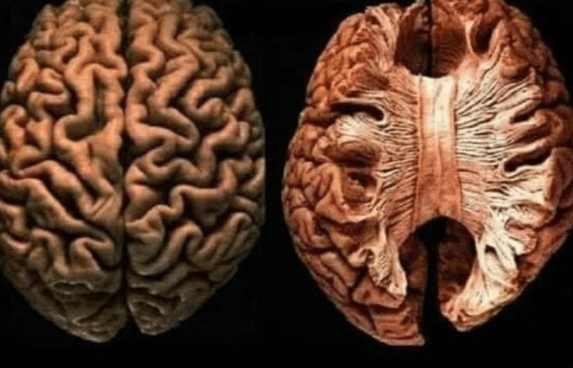
Pushing through exhaustion night after night might seem like you are being productive, but science reveals a darker truth; if you don’t get enough sleep, your brain literally starts eating itself.

Studies now uncover how severe sleep loss activates destructive cellular processes, turning your brain’s support system against itself which is mysterious yet horrifying.

Here’s how it happens:

At the heart of this damage are Astrocytes , star-shaped cells in your brain that normally tidy up the weak neural connections between brain cells to keep the brain efficient. In sleep-deprived states or in simple terms, without sleep, these cells get too aggressive and they start eliminating healthy synapses too.

Researchers found that they ramp up an enzyme called EEAT (excessive extracellular ATP), which aggressively breaks down healthy synapses, the critical junctions where neurons communicate. Far from routine cleanup, this resembles a demolition crew gone rogue, eroding the brain’s structural integrity.

On the other hand, Microglia, the brain’s immune cells, fight off the damage. Typically, they become hyperactive with chronic sleep loss, releasing inflammatory signals (chemicals that cause swelling) that mirror the early stages of Alzheimer’s disease. Brain scans and animal models in the study showed elevated markers of neuro-inflammation, hinting that repeated sleep shortfalls could accelerate cognitive decline over time.

While one bad night won’t cause any harm, habitual sleep deprivation quietly heightens risks for memory loss, mood disorders, and neurodegeneration.

Prioritizing sleep isn’t optional, it’s brain preservation. Aim for 7-9 hours nightly, establish a wind-down routine, and consult a doctor if insomnia persists. Your neurons depend on it.

No More Wires: Finland is Sending Power through Air

Scientists in Finland have achieved an exciting milestone in wireless electricity transmission, successfully guiding power through the air using ultrasonic sound waves and laser beams. This innovation seems to redefine energy delivery, eliminating the need for traditional cables.

Experts from the University of Helsinki and the University of Oulu have developed a method employing high-intensity ultrasonic waves. These waves create an invisible conduit or a pathway in the air, directing electrical discharges along precise paths and directions. Still in experimental stages, this technology holds potential for seamless, contactless power connections in smart devices and beyond.

On the light side, private companies are also advancing ‘power-by-light’ systems. They beam energy via lasers to remote receivers, with built-in galvanic isolation. This makes it ideal for high-risk settings like nuclear facilities and high-voltage grids.

Meanwhile, radio-frequency harvesting turns ambient air waves into usable power, like ‘Wi-Fi for electricity.’ This could run IoT sensors without disposable batteries, cutting down on environmental waste.

These breakthroughs undoubtedly position Finland at the forefront of a cable-free energy revolution,paving the way for smarter, more flexible infrastructure across industries.

Source: University of Helsinki News, “Wireless Electricity Transmission: Breakthroughs in Acoustic and Laser-Based Power.”

Stop Wasting Your Best Years: Study Smart, Not Wrong

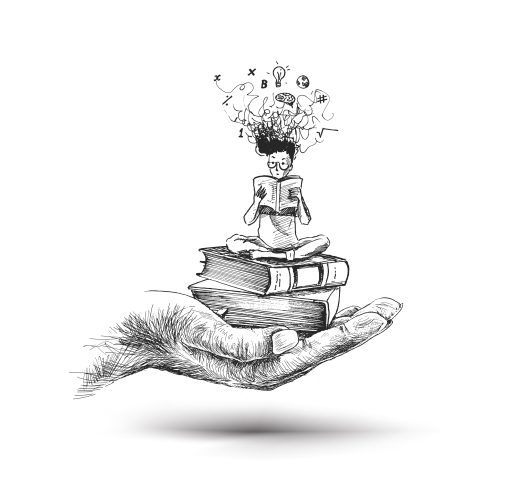
In a world obsessed with hustle culture and racing to the top, many students pour themselves into hard studying, cramming notes, chasing perfect grades and stacking degrees, only to hit the job market and feel utterly lost and purposeless. You’ve invested time, money and most importantly, your energy and young soul but for what payoff?

The harsh truth is, it is never about studying more or studying every day; it is about studying right. Wrong approaches waste years, leaving you skilled in trivia but clueless about what truly matters. Let’s break down why this happens and how to fix it.

The Traps of Wrong Studying

People, mostly undergraduates, often fall into these common pitfalls, turning education into a black hole of productivity.

  • Relying on rote memorization: You, most of the time, memorize formulas, theories or facts for exams but tend to forget them a week later. Real-world problems never demand this; it demands application. Memorizaation limits the brain from brainstorming and formulating new ideas, leading you to be like engineers who ace theory but can’t debug a code.

  • Ignoring your strength and market needs: Studying “prestigious” fields like law or medicine just because your parents said so, without actually checking if it fits your skills, passion and has jobs waiting, is the reason why thousands of graduates in Sri Lanka only compete for entry-level gigs.

  • Multitasking and passive learning: Reading a whole textbook while also trying to master every other skill has no good result. In fact, Studies from cognitive science show divided attention cuts retention, harming performance.

  • No real world testing: Grinding solo without projects, internships or feedback loops is like building theoretical castles that crumble under pressure.

These mistakes aren’t innocent. They compound and five years in, you are 28 with a degree, watching self-taught peers leapfrog you.

How to Study Right: A 5-Step pivot

Switch gears before it’s too late. Here’s a proven framework to make every hour count.

Step 1: Align with Purpose

Map your studies to real goals. Want to be a developer? Ditch generic CS theory; focus on Python, GitHub projects and LeetCode. Use tools like LinkedIn or local job sites such as TopJobs.lk in Sri Lanka to spot in-demand skills.

Step 2: Active, Spaced Learning

Replace passive reading with;

  • Pomodoro Timer + Recall: 25 minutes focused study, then quiz yourself without notes.
  • Spaced repetition: Make use of apps like Anki space out reviews to boost your long-term retention.

Step 3: Build and Ship

Theory alone is worthless. Every week, try to create:

  • Flashcards or answer sheets explaining a concept
  • A mini-project
  • And seek feedback

Step 4: Seek Mentors and Networks

Don’t study in isolation. Join communities like freeCodeCamp, local Meetups or university alumni groups. A mentor cuts your learning curve by years and one conversation with them can redirect your entire path.

Step 5: Measure and Iterate

Track progress weekly: skills gained, projects done, feedback received. If no growth in 3 months, pivot ruthlessly. Elon Musk didn’t waste years on irrelevant physics; he applied it on rockets immediately.

Don’t let wrong study methods trap you and your brain into thinking you are in the right direction because sometimes you may not. It is always safer to audit one subject per week, build projects and connect with experts.

Studying wrong is choice but studying right is a superpower. So, what would be your first move?

Article credits to: Divided attention: An undesirable difficulty in memory retention

How Self-Acceptance Fuels Personal Growth

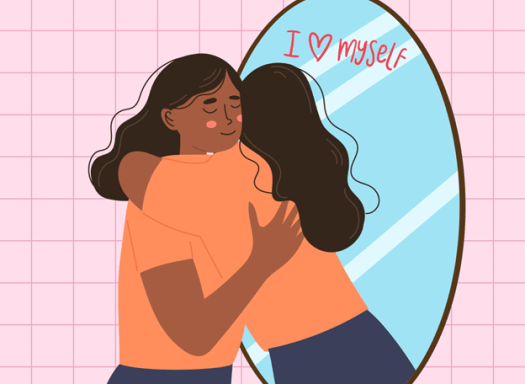
In a world that constantly demands perfection, comparison has quietly become a daily habit. People often measure their worth by social media standards, academic success, physical appearance, and public approval but in the midst of all these pressures, the simple yet powerful act of self-love is too easily forgotten. Loving oneself is not an act of selfishness; it is the foundation of emotional stability, confidence, and personal growth.

Self-love starts with simply accepting yourself.

It’s about noticing your strengths while being kind to your imperfections. Each of us carries unique talents, struggles, and stories that make us who we are. When we learn to accept ourselves, we let go of harsh self-criticism and begin to build a healthier relationship with our own identity. That acceptance makes us stronger, helping us face challenges and bounce back from failures with resilience.

Loving yourself means taking care of both your body and your mind. It’s choosing to fuel your body with good food, giving yourself enough rest, and moving in ways that keep you strong and energized. Just as important is caring for your mental health, knowing when to set boundaries, easing stress, and allowing yourself to pause without feeling guilty.

“It’s only after we’ve lost everything that we’re free to do anything.” – Tyler Durden, Fight Club.

When you practice self-love, you recognize that your well-being is just as important as the responsibilities you carry.

Self-love builds emotional independence.

When people truly value themselves, they don’t need constant approval from others. Instead, they make choices that reflect their own values, not just what society expects. This inner strength creates healthier relationships, because when you respect yourself, you set the stage for genuine mutual respect.

Before the success of Harry Potter, J.K. Rowling described herself as “as poor as it is possible to be in modern Britain, without being homeless”. Following a divorce and clinical depression, she described her rock-bottom moment as “liberating,” allowing her to focus entirely on her passion for writing. By trusting in her own voice despite 12 rejections, she transformed her life through self-belief.

Similarly, after dropping out of college, Steve Jobs took a calligraphy course because it interested him; a move that later allowed him to design the beautiful typography of the Macintosh. Later, being fired from Apple, the company he built humbled him but he used that time to rediscover his love for creativity, leading to his eventual return and success.

Self-love is directly linked to personal growth. When people believe in their worth, they are more willing to invest in learning, improving, and pursuing their dreams. They view mistakes as lessons rather than failures and approach life with confidence and determination.

Credits to Has social media clouded our perception of self -love?

Giving Voice to Human Emotions and Imagination

Poetry is among the oldest, most resilient modes of expression made possible by the human gift of life. Long before stories were penned into books, poetry was spoken, sung, and carried through generations as a way to share emotions, beliefs, and experiences and even to this day, poetry remains a force that has the astonishing ability to shape languages, cultures, and personal expressions in endlessly deep ways.

What makes poetry so worthy is that it can capture deep emotions with simplicity and meaning. Joy, sorrow, love, loss, hope, and fear can all be distilled into just a few well-chosen lines. The poets transform these very ordinary experiences into powerful emotional journeys through imagery, rhythm, and figure of speech. It is in this connection that the readers can feel seen, comforted, and inspired, and that reminds us that words, when woven with care, can touch the heart in ways nothing else can.

Poetry stirs the imagination and creativity in their readers, inviting them to look beyond the literal meaning to find deeper meanings. It provides an opening to unique interpretation and personal connections with metaphors, symbols, and rhythm. Such creative engagement, apart from strengthening artistic appreciation, nurtures critical and creative thinking in souls of any generation.

Why writers and poets encourage learning the art of poetry in education as well is because the role poetry plays in language development and personal growth is indescribable. It not only enriches vocabulary, sharpens pronunciation, improves reading fluency but also helps discover ways to interpret meaning, recognize literature in any discourse, and appreciate the beauty of language.

Once you get into poetry, you will hypnotize yourself with the power of your own words. You will witness your passion for self-expression, giving you the confidence to share your thoughts and emotions with clarity and authenticity.