Will Sri Lanka’s New Anti-Drug Plan Save School Children or Just Fake It?

“Drug addicts should be referred to proper rehabilitation centers. Special attention must be paid to the environment around schools and the intervention of the Sri Lanka Police in this regard is extremely important.”

This statement was made during a meeting, attended by officials from the National Authority on Tobacco and Alcohol, the National Dangerous Drugs Control Board, and the Ministry of Education, to discuss the issuance of a new circular on school-related drug prevention for the year 2026.

Is this Reform necessary? Will it curb Drug Use or let it persist?

Sri Lanka faces a growing drug crisis, especially near schools, where youth vulnerability is high. The proposed 2026 circular emphasizing rehab referrals, school-zone monitoring, and police involvement sounds proactive. But is it truly necessary and will it ambush drug use or just prolong the problem? Let’s break it down with evidence from regional trends and global parallels.

The alarming context is that according to Sri Lanka’s National Dangerous Drugs Control Board (NDDCB), drug abuse among students has spiked and it is found that these drug-addicted schoolchildren are most prevalent in Sri Lanka’s Western Province with the majority of cases occurring in the Colombo region.

In 2024, arrests of youth possession according to Police data (2024) had a growing concern over the rise of synthetic drugs due to the reasons that there were no clear targeted reforms, schools became gateways and the quiet residential areas in Colombo turned into hotspots.
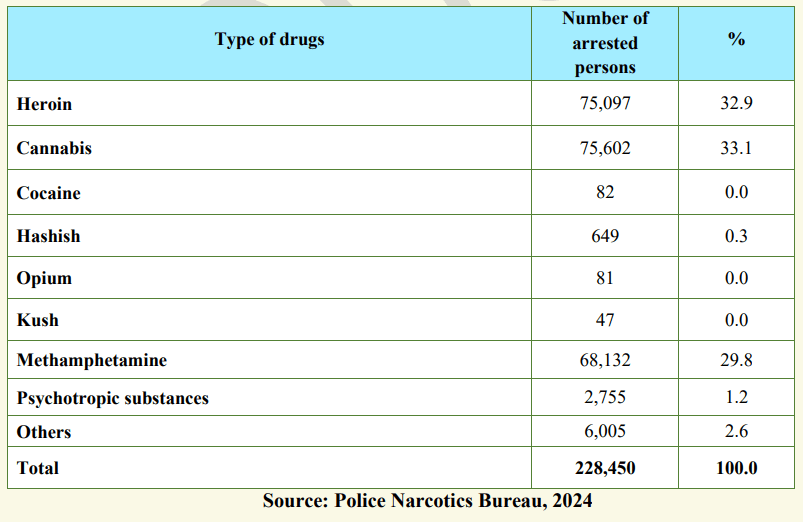
Then, these numbers changed into these in 2025 (January – July)
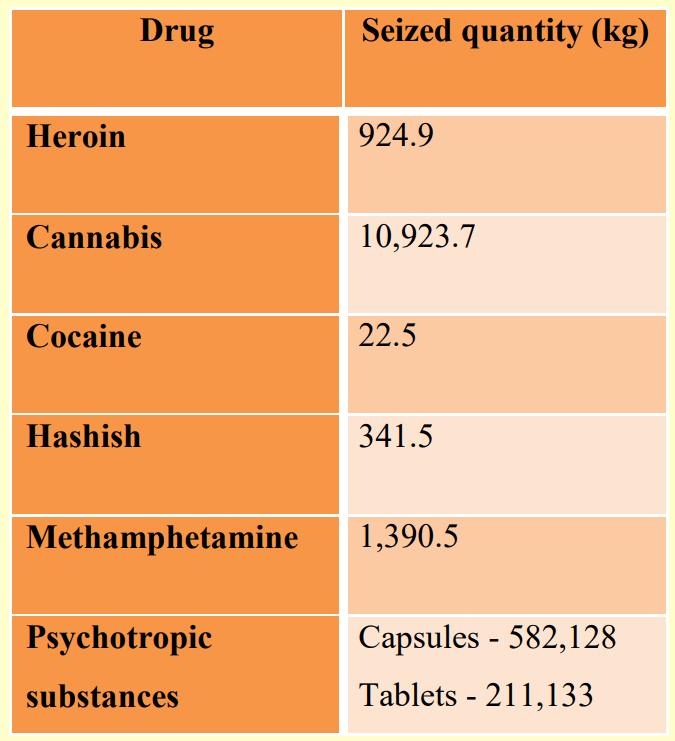
Source: Total number of persons arrested for drug-related offences

The two tables highlight one serious issue: the risk of children and urban adolescents being exposed to substances such as cannabis, heroin, and synthetic methamphetamine (ICE) continues to increase year after year, with no sign of decline, turning once-safe schools and neighbourhoods into targeted centres of drug transmission.

The Urgent Imperative

This initiative builds on past efforts. There were mandated awareness programs, initiatives and reforms but their enforcement lagged. A new reform for 2026, involving cross-agency collaboration (NDDCB, police, tobacco authority), tries to address these gaps by focusing on rehab over punishment, aligning with WHO guidelines. The focus of this imperative is holistic. The rehab referrals shift from criminalization to recovery, monitoring the above mentioned environments’ supply chains.

The meeting involved the National Authority on Tobacco and Alcohol (NATA), National Dangerous Drugs Control Board (NDDCB), and Education Ministry to draft a 2026 school-drug circular. This signals coordination especially with the inauguration of the National Mission ‘Ratama Ekata’ which can potentially handle the rising youth cases.

The Goal in Mind

Reforms like this often promise much but deliver little without teeth. One of the reasons why this could let drugs persist is the role of the police in controlling drugs through frequent raids that discourage local dealers. This effort is weakened by repeated corruption scandals such as the 2024 Navy methamphetamine trafficking cases which damage public trust and create perceptions of bias. At the same time, aggressive policing and raids can alienate vulnerable youth and push drug networks further underground.

Rehabilitation offers a more humane alternative by focusing on treatment rather than punishment. Yet access remains severely limited, with nationwide capacity at only about a few rehabilitation centres across the nation which ultimately questions rehabilitating every drug exposed is really possible and if these long waiting lists mean many referrals exist only on paper, not as real interventions.

Awareness campaigns aimed at protecting schools can help communities respond better, but the lack of dedicated funding for counseling leaves students exposed, making it harder to control through traditional policing.

Although the new circular calls for firm action, past experience raises concerns.

Police have reported that between January 1 and August 31, 2025,  206 children were taken into custody for drug-related offenses, though there were over 15,600 awareness programs being conducted to tackle the issue. This data reveals a troubling reality: previous initiatives often characterised by weak implementation of school drug prevention policies and limited involvement of principals and education offices may have contributed to worsening drug use among students.

This highlights the risk of repeating symbolic reforms without proper oversight, funding, and follow-through.

Therefore, before diving into these initiatives without considering their effects on the less visible aspects of society, it is imperative to conduct rigorous audits, provide teacher training, and implement community programs continuously to monitor both the decline and rise of drug use and to analyze ways in which these programs can be effectively implemented, not merely for the sake of doing so.

Doomsday Clock 2026: What the “85 Seconds from Midnight” Really Means for the World

The Doomsday Clock has been set to 85 seconds to midnight which is the closest it’s ever been since it was introduced in 1947, signaling rising global risks and existential threats.

Let’s get into simple terms. The Doomsday Clock isn’t a countdown timer in the usual sense because it doesn’t tick down in real time like the usual clocks do and it doesn’t precisely predict the moment the world will end. But when scientists say we are 85 seconds to midnight, it is hard not to pause and feel uneasy.

What does the midnight represent? Midnight in this case represents global catastrophe or a point where human-made threats like war, climate collapse, technology and pandemics overwhelm our entire abilities to control them. What’s more concerning is that being this close has never happened before. According to the scientists behind the Doomsday Clock, we are closer to disaster than any point in modern history.

This 85 seconds is symbolic and not literal. It doesn’t mean that the world ends in 85 seconds; rather it represents how compressed the margin for error has become. In simple terms, we no longer have the luxury of time to reverse our mistakes. We had time before, but now, we don’t anymore.

One reason the clock moved closer this year, 2026, is because, as experts have pointed out, a dangerous mix of problems is occurring all at once. This is indeed true because today, nuclear tensions remain as high as ever (especially with diplomatic trust becoming more fragile), climate change is advancing rapidly, biological risks including pandemics remain a real threat almost every day and international cooperation is weakening, particularly when it is needed the most.

These not only say that individually, these risks are serious but also together, they amplify each other.

This clock is not saying, “it’s over.” But it’s definitely saying, “this is the moment to act.” The closer the clock gets to midnight, the louder the warning becomes. The scientists state that it is possible to move the clock back but it solely depends on human choice rather than fate.

We may not know how soon things could unravel but one thing is sure now: the time to fix what’s broken is now, not later.

Sources: Doomsday Clock 2026: Scientists set new time

Want to find out how technology has rewritten childhood? Read:

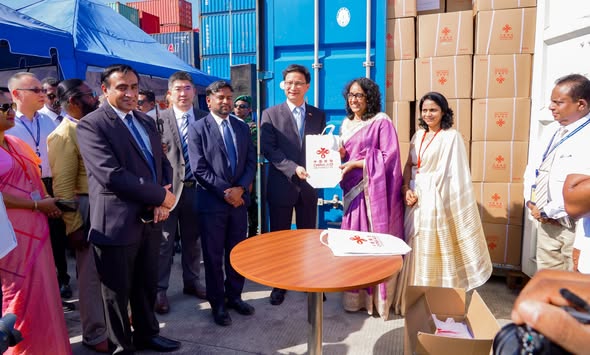
China-Sri Lanka Partnership Strengthened through School Uniform Donation

Prime Minister and Minister of Education, Higher Education and Vocational Education, Dr. Harini Amarasuriya, reaffirmed the strong relationship between China and Sri Lanka, highlighting education as a shared foundation for equality and development.

Speaking at an event held recently to mark China’s continued donation of free school uniform materials, the Prime Minister stated that both China and Sri Lanka can be identified as nations committed to providing equal access to fundamental education for all children. She emphasized that such collaborations play a crucial role in ensuring educational equity across the country.

Dr. Amarasuriya noted that the support extended by the Chinese government has been a significant strength in Sri Lanka’s efforts to maintain quality education, particularly during challenging times. She further stated that China’s long-standing commitment to providing school uniform materials, fulfilled consistently over several years, clearly reflects the mutual trust, respect, and enduring friendship between the two countries.

“The uninterrupted fulfillment of this promise demonstrates China’s solidarity with Sri Lanka, especially during periods of difficulty,” she said, expressing gratitude on behalf of all Sri Lankans for the generous donation.

As part of this initiative, the Chinese community has donated school uniform fabric valued at approximately 11.484 million units as a full grant. The materials delivered to Sri Lanka in five shipments. The official handover of the donation was made to the Ministry of Education, Higher Education and Vocational Education by the Ambassador of the People’s Republic of China to Sri Lanka, His Excellency Qi Zhenhong.

It is expected that approximately 4,418,404 students will receive school uniforms this year. Distribution of the materials to Divisional Education Offices was scheduled to begin from January 19, 2026. Free school uniforms will be provided to students in government schools, government-approved Pirivenas, and government-approved Pirivena institutions across the island, under a programme implemented by the Ministry of Education, Higher Education and Vocational Education.

Addressing the event, Ambassador Qi Zhenhong highlighted the long-standing and resilient relationship between China and Sri Lanka, noting that the partnership has endured despite various challenges. He reaffirmed China’s commitment to supporting Sri Lanka’s education sector and contributing to the country’s long-term development.

The event was attended by Deputy Minister of Education and Higher Education Dr. Madura Seneviratne, Secretary to the Ministry of Education Mr. Nalaka Kaluwewa, and several other officials.

Kerala’s Shocking Truth: Super Educated yet Super Unemployed

Kerala has India’s highest literacy at 96.2%, surpassing or rather beating the national average for literacy rates. Malayalis chase degrees, dream big, and vote left for welfare. Yet, over 25% of educated rural youth and 20% urban grads sit jobless, turning the situation into a paradox of pride and pain.

The Wrong Kind of Smarts

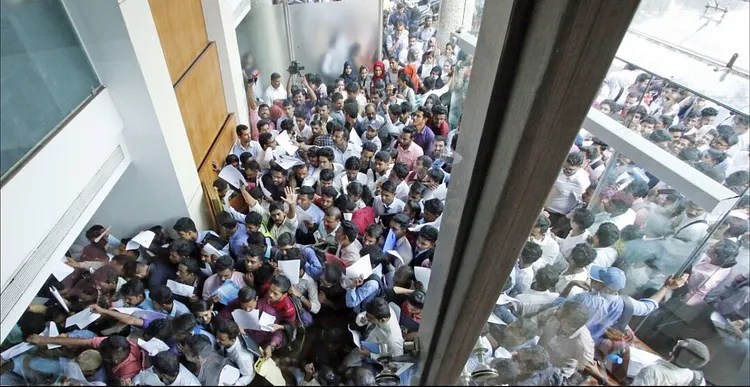
Due to big government spends, Kerala’s schools reach everyone. But Malayalis focus stays on conventional degrees in arts and science for “white-collar” government jobs and with thousands applying for the same public sector spot, job opportunities get drastically unavailable, leading the same thousands of young to settle for lower-paying jobs like peons or janitors. Malayalis strong preference for salaried jobs rather than entrepreneurship is rooted in another kind of reality which really uncovers the effects of having an unhealthy education system as well as a political climate. On one hand, Malayalis who are not self-taught yet excessively drown in unnecessary conventional studies do not possess the kinds of skills that match self-employment. Their educated grads twiddle thumbs while factories beg for workers.

Educated Unemployment

This educated unemployment has become a serious test of Kerala’s development. As a result of constantly struggling to create enough suitable jobs, a large numbers of Malayalis migrated abroad, especially to Gulf countries, in search of better employment opportunities. Over time, the “Gulf Malayali” became a familiar figure in Kerala’s social and cultural life and was often viewed as financially stable and highly desirable.

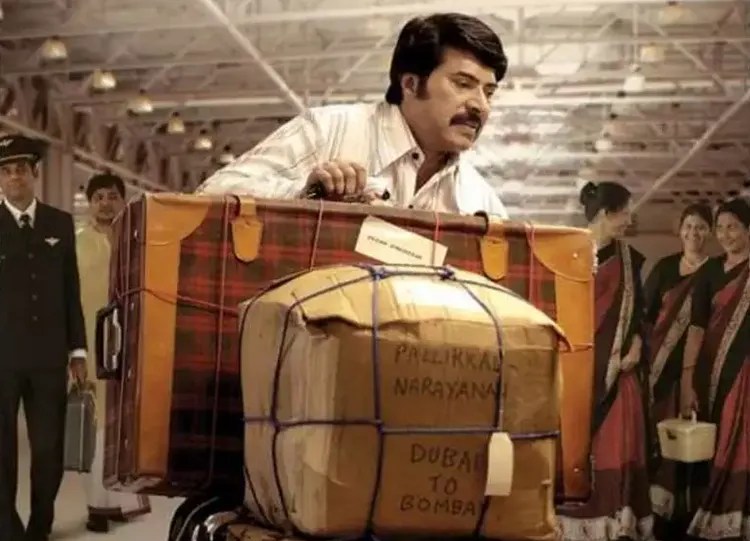
The theatrical release movie poster for the 2015 Malayalam film ‘Pathemari’, that depicts the socio-economic struggles of the Gulf Malayali. Image credits: The Kerala Paradox: From High Literacy to High Educated Unemployment

The Kerala- Gulf diaspora, numbering over two million people, has played a major role in the state’s economy. In 2019 alone, remittances from abroad brought in nearly $14–15 billion, boosting household income, consumption, and savings, and contributing significantly to economic growth. However, this migration also created a shortage of local workers in low-skilled sectors such as construction and coconut harvesting. These jobs are now largely filled by migrant workers from North-Eastern Indian states. This balance between skilled emigration and migrant labour inflow has become a key feature of Kerala’s economic development. But in the wake of oil crashes, visa cuts, and COVID slashing over 300,000 jobs since 2013, the Malayali’s diaspora’s dream has been fading. Then unemployment started hitting 26.5% as of May 2020 and now returning grads face empty promises with no high-skill gigs waiting.

Despite these rates, a gender gap in literacy seemingly continues to persist across India. Men consistently show higher literacy levels than women, reflecting long-standing social and economic inequalities in access to education. In states like Kerala, this gap is much smaller due to strong investments in education, but women still fall just behind men. In contrast, states with lower literacy levels show much wider differences, with far fewer women able to access basic education. This highlights that while progress has been made, achieving true gender equality in education remains an ongoing challenge. This in fact underlines the need for continued policy focus on gender equality in education.

Sources:

  • Mathrubhumi News, 2019.
  • The Kerala Paradox: From High Literacy to High Educated Unemployment
  • At 96.2%, Kerala tops literacy rate chart; Andhra Pradesh worst performer at 66.4%