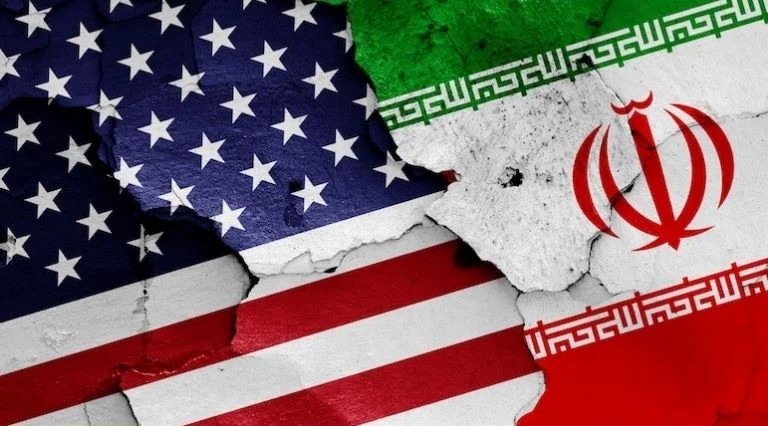
Rashid Khalidi, a Palestinian historian, in his 2020 article The Hundred Years’ War on Palestine: A History of Settler Colonial Conquest and Resistance, 1917-2017, argued that the British and American colonial ambitions were profoundly inspired by Zionist aspirations to rule Palestine for centuries. Accordingly, this conflict between the United States and Iran is hardly a single war. It is a long awaited and complicated struggle that is shaped by politics, ideology and various dynamics of power. These notions came into play nearly 47 years ago, making a prolonged chapter, known as “Fifty-Year War.”
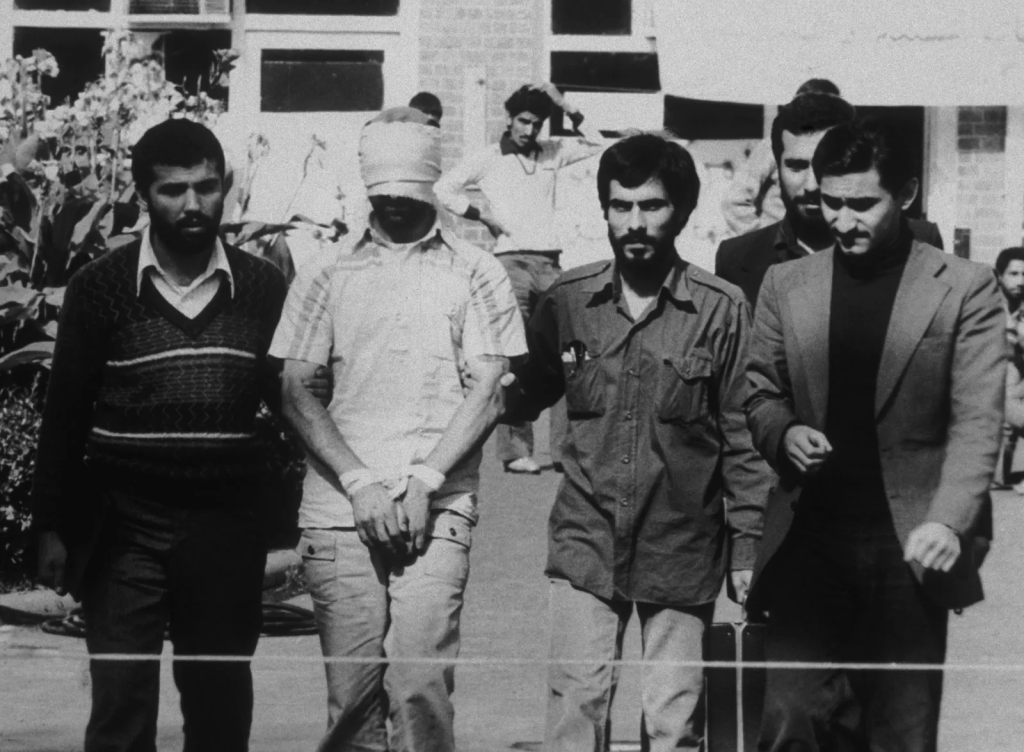
Let’s go back to 1979 when Iran’s unstable political climate started with the overthrown of one of America’s most trusted clients in the Middle East, Shah Mohammad Reza Pahlavi. Shah was described as “a ruler with dictatorial powers, a massive military and delusions of grandeur.” America ignored US diplomats who questioned this over-reliance the US had with Iran and Shah, on the other hand, silenced everyone who called for political change. This whole chapter was followed by the 1979 Islamic Revolution led by Ayatollah Ruhollah Khomeini who caused a massive shift in regional politics and ideologies, instantly transforming Iran from a key US ally to an adversary. He labelled the US the “Greater Satan” and called the seizing of the US Embassy in Tehran, severing all the diplomatic ties and creating the 1979-1981 hostage crisis. His rhetoric was entirely anti-American.
In the same year, Iraq became another triggering point for this ever-escalating war. It began with Saddam Hussein becoming the president of Iraq where he theatrically saw both Israel and revolutionary Iran as hindrance to his ambitions towards pan-Arab leadership. He launched a “full-scale invasion” of Iran that lasted for eight years, resulting in devastating economic and societal contractions in both sides but Iraq was facing greater repercussions.
In the Iraq-Iran war, the US secretively supported Iraq, providing intelligence, chemical weapons and financial aid. They defined Khomeini’s revolutionary Iran as a great threat to regional oil stability. They also propagated Iran as a state that sponsors terrorism. This amplified the enmity between Iran and the US.
Iran had denied Israel rights to even exist since the 1979 revolution. Their motto since then was “Death to Israel.” It was at this time that Israel was considered one of the greatest allies of the US, leading Iran to despise Israel even more. Thus, the Islamic Republic was concerned that both the US and Israel brought existential threat to Iran. They, therefore backed a network of well-armed groups where they spread their ideologies and expanded influence. These groups that were collectively known as the “Axis of Resistance,” included Hezbollah (Lebanon), the Houthis (Yemen), Hamas/Palestinian Islamic Jihad (Gaza), and various militias in Iraq, with strategic state relationships with Russia.
With this expansion of power, Iran could develop a Nuclear weapons program in which they repeatedly reported that this program was solely based in peaceful purposes for its citizens. The US considered this a terrorist activity in the Middle East, yet again heightening the rivalry between them.
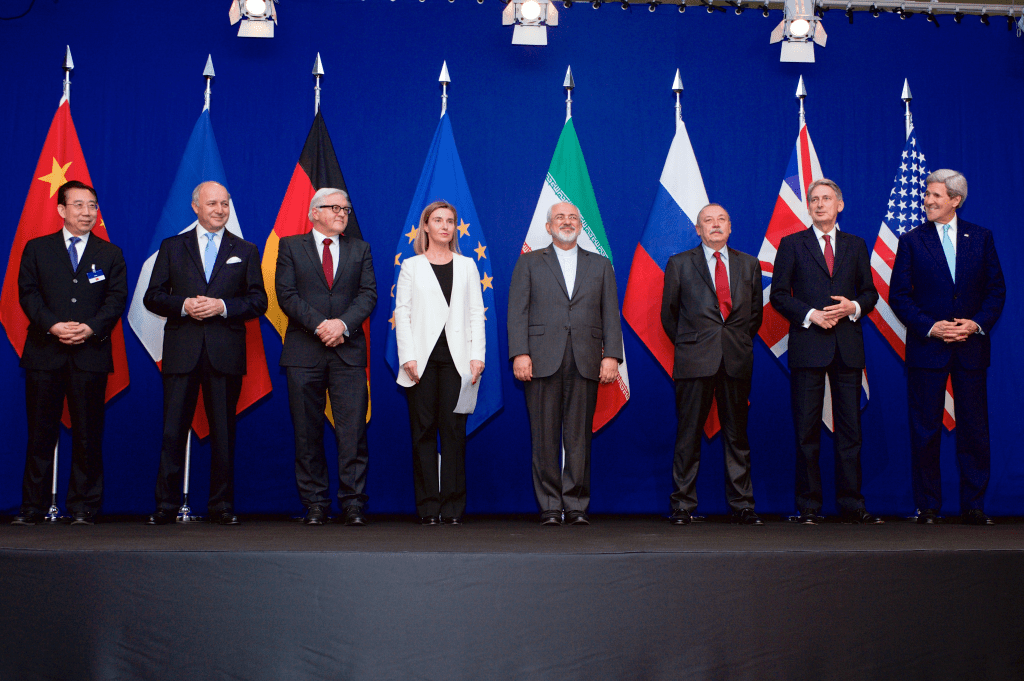
Then a breakthrough came in 2015 when Iran, along with several other world leaders including the US, signed an agreement to limit its Nuclear program. This agreement was formally know as the Joint Comprehensive Plan of Action (JCPOA). Before this, Iran had signed the Nuclear Non-Proliferation Treaty (NPT) in July 1968 and ratified it in February 1970 while accepting International Atomic Energy Agency (IAEA) inspections. Somehow this JCPOA agreement enabled reconciliation between the two nations, allowing Iran to open its facilities to more extensive international inspections in exchange for billions of dollars’ worth of sanctions relief.
This fell apart as President Trump removed the US from this agreement, stating, “we have definitive proof that this Iranian promise was a lie. Last week, Israel published intelligence documents long concealed by Iran, conclusively showing the Iranian regime and its history of pursuing nuclear weapons.” in his first presidency in 2018.
Then, in 2019, the US accused Iran of attacking oil tankers in the Gulf of Oman. In response to the accusations, Iran issued a statement, calling the US and its allies to put an end to mischievous plots and false flag operations in the region.
In 2020, Iran’s top military commander, General Qasem Soleimani, was assassinated in a U.S. drone strike. The US claimed that Soleimani was behind attacks on Americans in the region.
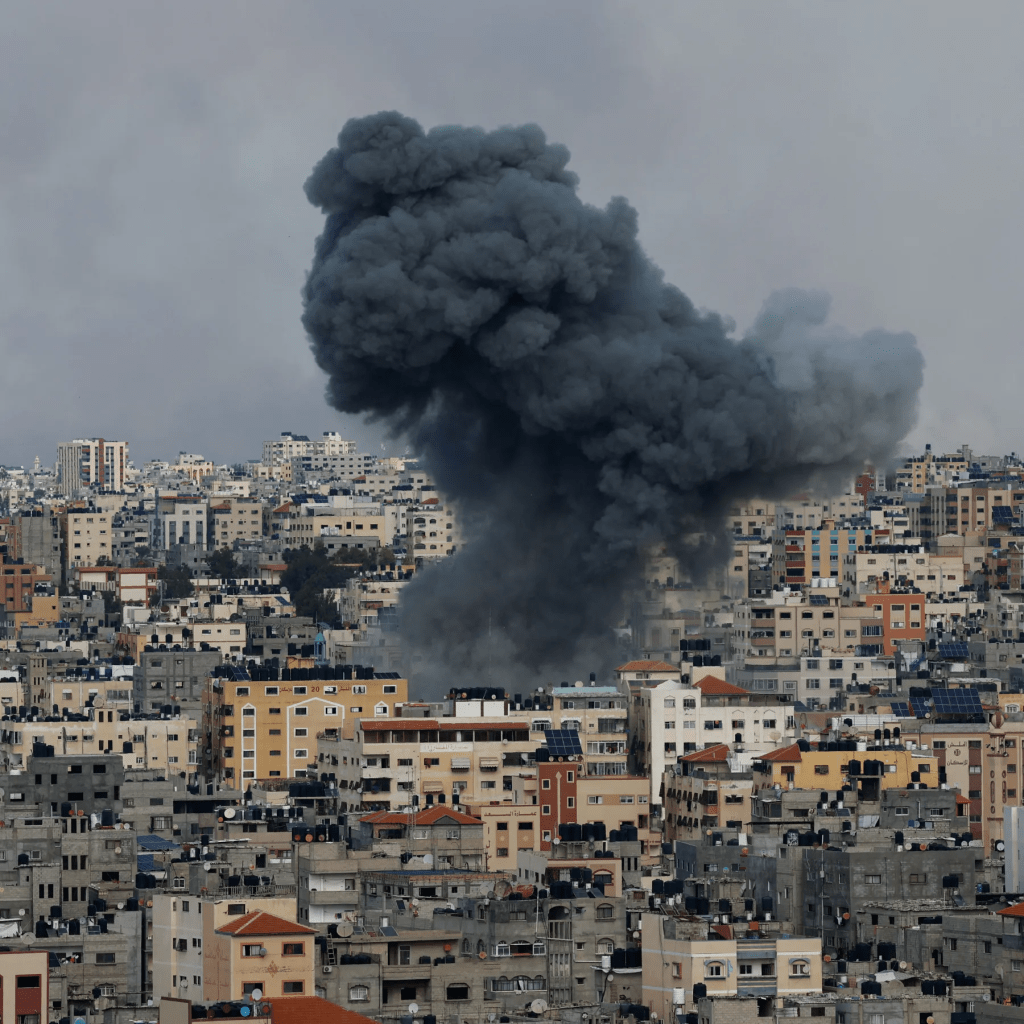
In 2023, Hamas, a long-term ally of Iran which was considered a terrorist organization by the US, launched an attack on Israel from Gaza Stripe, killing about 1,200 people and taking 251 hostages. This resulted in a massive Israel military attack in Gaza which killed tens of thousands of Palestinians. This attack left Hamas extremely defenseless. Though Iran denied any involvement in the Hamas attack on Israel, they publicly supported the actions of Hamas.
In June, 2025, the UN’s Nuclear watchdog said that Iran had breached its agreement on limiting the Nuclear program under the Non-Proliferation Treaty (NPT). Yet, Iran repeatedly claimed that they had never developed a Nuclear weapon.
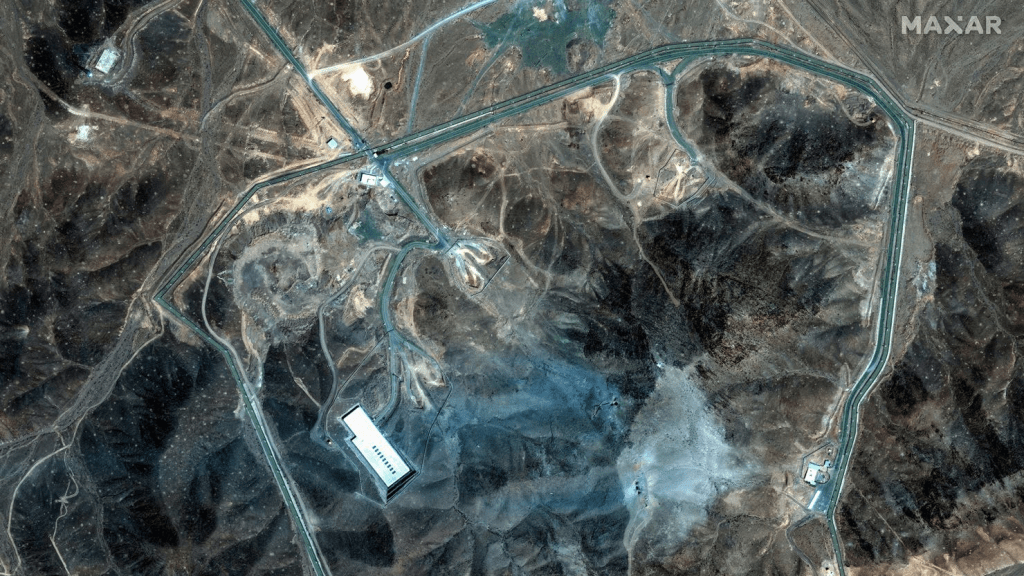
After this, Israel launched a series of strikes in Iran, resulting in a 12 day war. The US was also directly involved in the war with air strikes on Iranian Nuclear facilities.
In September 2025, the UN reimposed severe UN sanctions, following the E3‘s (France, Germany, UK) move due to Iran not following the agreed rules about nuclear activities.
What are these sanctions?
These are serious economic and political restrictions, such as:
- Freezing Iran’s money/assets
- Banning arms trade
- Limiting nuclear activities
- Blocking trade and financial dealings
After the sanctions, Iran faced economic hardship, global isolation and growing dissatisfaction among its citizens who often demanded political change in the country. They chanted slogans against the Supreme Leader Ali Khamenei yet thousands of these protesters ended up getting killed on the streets. While President Trump expressed support on these protesters and warned Iran not to act on violence, Ayatollah Khomeini, blamed the US President for the protests and deaths. It is after this Khomeini was killed on February 28, 2026, in an attack by Israel and the United States.
In the end, the long-standing war between America and Iran has no easy solution. Though strikes may slow each side’s ambitions, they are seemingly not capable of resolving deeper political, economic and social issues within either country.
But what should not go unnoticed is that the US and Iran have been fighting with each other for decades and it is driven not only by Iran’s alleged possession of Nuclear weapons but also by broader and more complicated diplomatic, economic, cyber, political and espionage tensions between the two nations.
 Acadora