
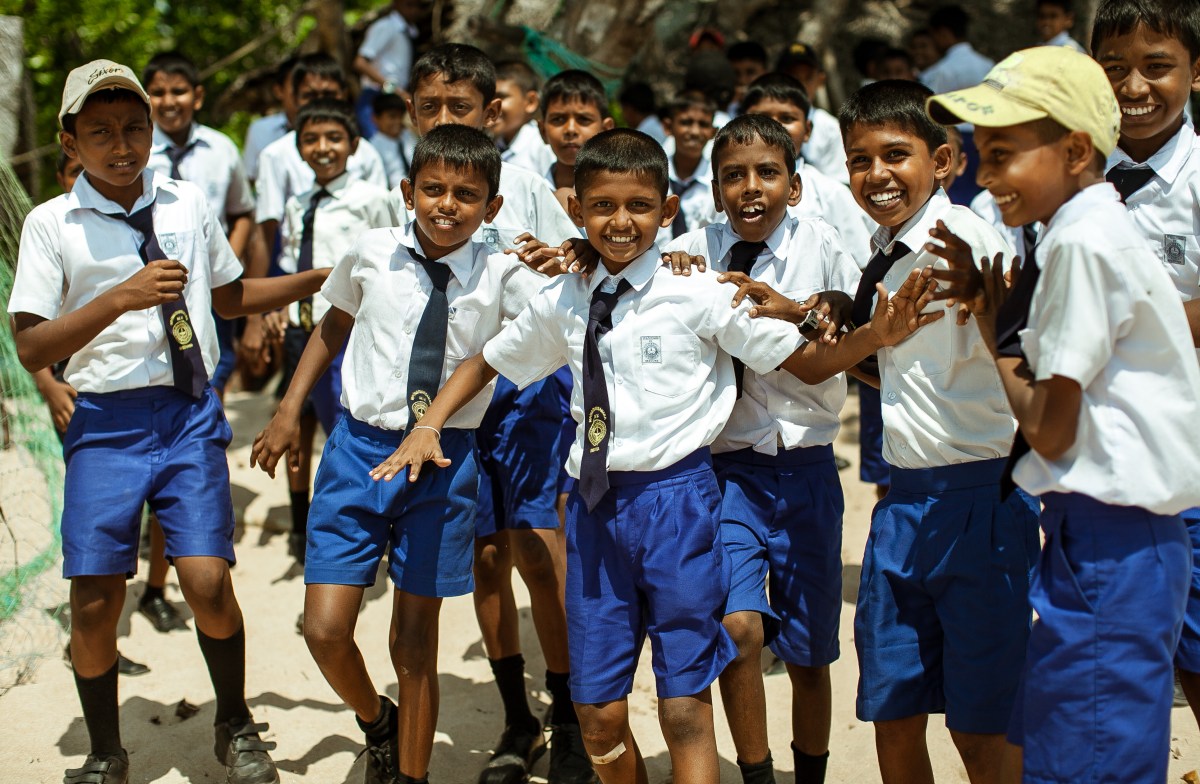
Sri Lanka is often proud of its “free education” system and high literacy rates. Yet beneath these numbers lies an education system struggling with language barriers, structural bottlenecks, inequality, and outdated practices. Without proper reform, these problems have been deepening and limiting the school children’s knowledge, hindering their personal as well as professional success.
Let’s properly address this gap.
1. English Proficiency: A National Bottleneck
Though in government schools, basic English is taught from early grades, true proficiency remains low. Only about 22% of Sri Lankan adults are literate in English, which severely limits access to global knowledge, research, and digital resources that are overwhelmingly in English.
Moreover, 87% of schoolchildren lack access to trained English teachers, especially in rural and estate areas, leaving vast swathes of students behind. This creates a self-reinforcing cycle where students’ English is only examined in the English subject,restricting them from truly learning English. This lack of exposure continues to trouble students even after entering higher studies because university instruction is largely English-based. Many undergraduates feel like entering a whole new world that heavily requires a good agency over English. Also, up-to-date materials, and technology become inaccessible to them because their English skills were never developed.
International schools ,on the other hand, typically use English as the primary language of instruction from the very beginning, meaning students learn subjects like Math, Science, History, and even classroom communication entirely in English. This immersion method helps students develop fluency naturally, as they are constantly reading, writing, speaking, and thinking in English throughout the day.
Teachers are often trained in international curricula such as Cambridge or IB, where English proficiency is essential, and classrooms encourage discussions, presentations, and critical thinking in English. As a result, students’ access to the world beyond traditional and narrow learning techniques gets broader day by day.
Proficiency in English is not just about language; it’s about access, opportunity, and equity. That’s why teaching English properly is just as important as teaching one’s mother-tongue.
2. The O/L-A/L System Creates Delay and Inequality
Sri Lanka’s school system is heavily exam-centric, culminating in the G.C.E. Advanced Level (A/L), through which only a small fraction gain entry into universities. Government schools sole purpose is to guide their students score high marks for major examinations. This ultimately makes these students puppets that act according to the puppeteers’ commands. Because of this, there are students repeating A/Ls multiple times, delayed entry into the workforce (often finishing university years later than global peers) and private tuition dependence as a de facto pathway to passing exams.
This effect doe not seem to be practised in international schools and that deepens inequality: children from wealthy families (who can afford international edcation) are far more likely to succeed than those from poorer regions.
3. Resources and Teaching Methods
Another major difference lies in resources and teaching methods. International schools generally have better facilities such as modern classrooms, digital learning tools, updated libraries, smaller class sizes, and teachers trained in global curricula. Their teaching style is often interactive and student-centered, focusing on discussions, presentations, critical thinking, and practical application of lessons.
In contrast, many government schools face limited resources, larger classrooms, and fewer technological tools. Teaching is often more exam-oriented and lecture-based, with greater emphasis on memorization rather than skill development. This difference in infrastructure and approach can significantly affect the overall learning experience and student outcomes.
What Real Reform Could Look Like
Schools can prioritize English language from early grades where creating true bilingual capability, not just “English subject” would open access to global information and opportunities.
Rethinking the A/L gatekeeper model is also equally essential because combining or replacing A/Ls with broader pathways like credit-based systems, modular evaluation, community college preparation guide students to build wider competencies instead of memorizing to pass a high-stakes exam.
Integrating broader core learning, including critical thinking, foundational science, digital literacy, and humanities earlier, across streams, would help students become more adaptable globally.
Schools should also democratize digital & online resources where high-quality learning content (in both English and Sinhala) are available free online, paired with in-school guided implementation that could reduce dependence on costly tuition and support equity.
Sri Lanka’s education system still carries structural legacies of a centralized, exam-oriented model that doesn’t reflect the needs of the 21st century economy. Language barriers, inequality, and outdated practices collectively limit the nation’s potential.
Related Reads:
 Acadora