
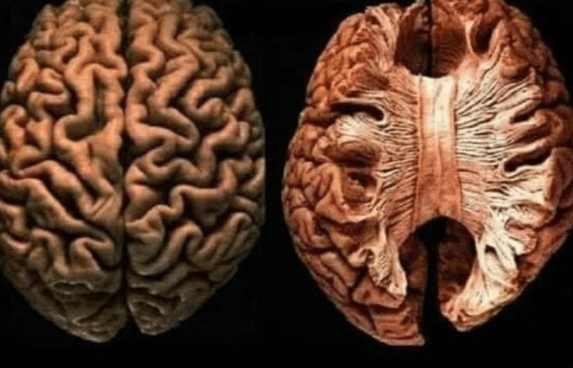
Pushing through exhaustion night after night might seem like you are being productive, but science reveals a darker truth; if you don’t get enough sleep, your brain literally starts eating itself.
Studies now uncover how severe sleep loss activates destructive cellular processes, turning your brain’s support system against itself which is mysterious yet horrifying.
Here’s how it happens:
At the heart of this damage are Astrocytes , star-shaped cells in your brain that normally tidy up the weak neural connections between brain cells to keep the brain efficient. In sleep-deprived states or in simple terms, without sleep, these cells get too aggressive and they start eliminating healthy synapses too.
Researchers found that they ramp up an enzyme called EEAT (excessive extracellular ATP), which aggressively breaks down healthy synapses, the critical junctions where neurons communicate. Far from routine cleanup, this resembles a demolition crew gone rogue, eroding the brain’s structural integrity.
On the other hand, Microglia, the brain’s immune cells, fight off the damage. Typically, they become hyperactive with chronic sleep loss, releasing inflammatory signals (chemicals that cause swelling) that mirror the early stages of Alzheimer’s disease. Brain scans and animal models in the study showed elevated markers of neuro-inflammation, hinting that repeated sleep shortfalls could accelerate cognitive decline over time.
While one bad night won’t cause any harm, habitual sleep deprivation quietly heightens risks for memory loss, mood disorders, and neurodegeneration.
Prioritizing sleep isn’t optional, it’s brain preservation. Aim for 7-9 hours nightly, establish a wind-down routine, and consult a doctor if insomnia persists. Your neurons depend on it.
 Acadora